





Don’t see your provider? Contact us to confirm coverage.
Are you curious about Klonopin? This medication is often prescribed to people who suffer from anxiety disorders, and it can be helpful in managing symptoms. However, it’s important to understand how this drug works and what potential side effects you may experience before taking it.
In this blog post, we’ll provide an overview of Klonopin, including its uses and potential risks. We’ll also discuss ways to reduce the risk of experiencing side effects.
What Is Klonopin?
Klonopin (generic name: clonazepam) is a prescription drug under the benzodiazepine classification. Benzodiazepines can be considered medical manna for individuals suffering from medical disorders attributed to excess neural activities. Clonazepam is often prescribed to treat panic attacks and anxiety.
Street names for clonazepam vary based on the region and on what substances it’s being mixed with. Clons, K-pins, tranks, and Super Valium are names that refer to this prescription drug or a mixture therewith.
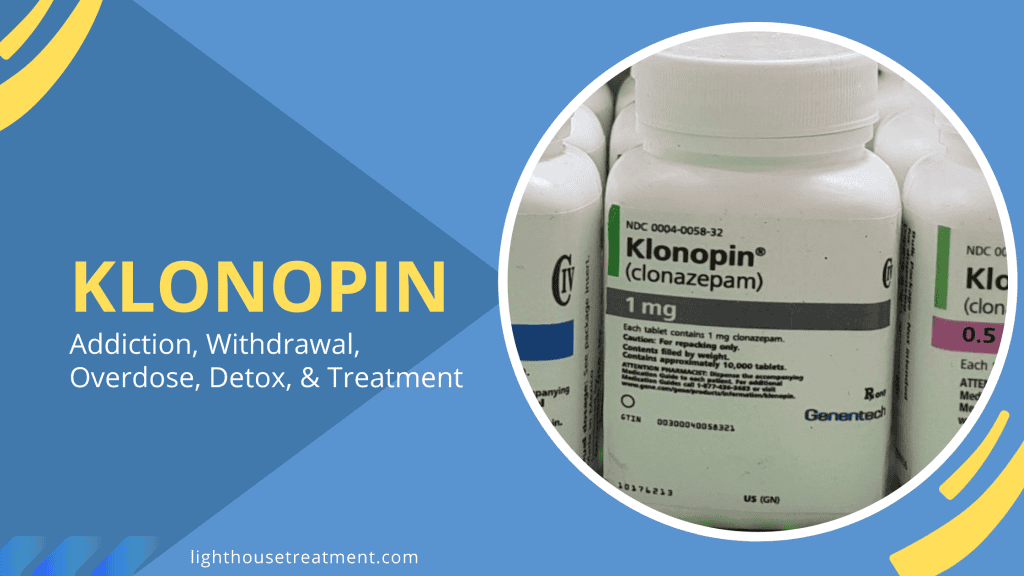
What Does It Look Like?
In the market, it is sold in different forms:
- scored orange tablets containing 0.5 mg of the active ingredient clonazepam
- unscored blue tablets containing 1 mg of the active ingredient
- unscored white tablets containing 2 mg of the active ingredient.
A K-shaped puncture appears in all these tablets along with an imprint signifying the amount of clonazepam content.
In its purest form, clonazepam is light yellow in color. It’s crystalline powder in structure, with a molecular weight of 315.72.
What Is It Used For?
The use of clonazepam in medicine is extensive, and it is commonly used to treat and prevent seizures and panic attacks.
It is also used in the treatment of akathisia. This is a movement disorder characterized by the inability to remain still and Lennox-Gastaut syndrome (LGS) or childhood epileptic syndrome.
Several studies reported that a three-month Klonopin medication produces 30% patient recovery from seizure disorders. While a six-to-nine-week medication can treat DSM-IV category panic attacks.
How Does Klonopin Work?
Being a member of the benzodiazepine class, these drugs work by stimulating gamma-aminobutyric acids (GABA).
GABA are neurotransmitters that inhibit neural activities in the central nervous system. This mechanism has a calming effect on the brain.
How Long Before You Can Feel the Effects?
You can experience the therapeutic effects in 1 to 4 hours after oral ingestion. The drug has an average half-life of 30 to 40 hours. This means it takes about a day or two for 50% of the drug to be flushed out from the body.
The body can completely metabolize the majority of the drug. Only less than 2% of the substance is left to be excreted through the urine.
How Long Does Klonopin Stay In Your System?
If you’re about to take a drug test, you may want to know how long Klonopin stays in your system. Will a drug test detect this drug?
This drug stays in the blood, saliva, and urine up to five or six days after it was last taken. It can be detected in the hair for up to four months.
What are the Short and Long-term Effects of Klonopin?
Among the short-term effects of clonazepam use are:
- slight memory loss
- confusion
- degraded body coordination
- drowsiness or sleepiness
- allergic reactions
Meanwhile, long-term use has a number of side effects. This includes ataxia, asthenia, vertigo, dysarthria, respiratory complications like nasal or chest congestion, and dermatologic diseases like alopecia and facial edema.
The brain depressant function of this drug is magnified when taken with other neural depressants.
This benzodiazepine is not suitable for nursing mothers and pregnant women, as it can cause fetal damage.
It’s best to call your doctor for medical advice about the side effects of this drug.
Is Klonopin Addictive?
Yes, Klonopin is habit-forming and addictive.
This drug falls under the Schedule IV substances category of the DEA. It is less potent than Schedule III drugs like cocaine and opium. Nonetheless, it is a potentially habit-forming substance.
You can develop drug dependence if you consume more than 20mg dose of clonazepam daily – for a period longer than what was prescribed by your doctor.
Misuse often involves intake of the drug together with alcohol, heroin, or cocaine to magnify the resulting euphoric sensation. However, misuse may also come in the form of excessive consumption of the drug.
In January of 2019, an article in Chicago Tribune referenced a U.S. survey suggesting that one in every five persons using benzos has abused these substances. Klonopin was reportedly the second most misused drug in the benzodiazepine class in 2011.
Hollywood actress Lena Dunham brought this particular benzo to the spotlight. In October of 2018, she publicly admitted dependence and eventual sobriety from Klonopin.
Not unlike the case with other benzodiazepines, Dunham’s struggle with clonazepam abuse is neither isolated nor new. Many Americans experience a thin line between effective treatment and abuse.

What Are the Withdrawal Symptoms?
Following the last intake of this long-acting medicine, individuals may experience withdrawal symptoms for two to seven days.
These signs and symptoms may include:
- loss of appetite
- sudden weight loss
- lack of concentration
- excessive sweating
- sleeping difficulties
- frequent or otherwise persistent headaches
- muscle spasms
- increased irritability
- unstable mood or behavior
What Causes Klonopin Overdose? Signs of an Overdose
Overdose may occur when users take in more than what is prescribed. This usually happens in a misguided attempt to expedite or intensify desired results. If you drink alcohol or use other substances in combination with the drug, it can lead to a life-threatening overdose.
Common signs and symptoms of drug overdose include:
- increased aggression
- impaired speech
- slight loss of memory
- loss of consciousness
- difficulty breathing
These symptoms can be addressed using one or more of the available treatments. Treatments include periodic monitoring of vital signs and the introduction of intravenous fluids into the system. It is also important that overdose patients are able to breathe sufficiently.
Several substances can be used in treating an overdose. When low blood pressure results from excess intake of the drug, levarterenol or metaraminol can be used.
Activated charcoal is another form of medication and is used to absorb the substances inside the body. Meanwhile, flumazenil and romazicon can be used to counteract the effect of Klonopin.

How Do You Treat Klonopin Addiction? Detox & Treatment
Treatment of Klonopin addiction may involve detox, medication, therapy, or a combination of both. Medications used in the treatment of overdoses, such as flumazenil and activated charcoals are also used in the treatment of addiction.
Phenobarbital, a drug under the barbiturates class, can be used to minimize seizures and anxiety associated with the treatment process. You can also use several other potentially anxiolytic drugs, for instance, Tegretol (generic name: carbamazepine) and Tofranil (generic name: imipramine).
Patients may also choose to participate in CBT, recovery groups, reward systems, or medication management programs in their drug treatment.
Final Thoughts: Addressing Klonopin Abuse and Addiction
Klonopin abuse and addiction are serious issues that should not be taken lightly. If you or a loved one is struggling with an addiction to Klonopin, please get help.
There are many resources available to you. Check out professional treatment programs and support groups like Alcoholics Anonymous (AA) and Narcotics Anonymous (NA). Don’t try to fight this battle alone – there is hope for recovery.