






Don’t see your provider? Contact us to confirm coverage.
Valium is one of the most prescribed drugs in America. It’s a benzodiazepine sedative. When taken as prescribed by a doctor, it can be beneficial. However, when abused, it can also be harmful.
If you’re prescribed Valium and aren’t sure if it’s safe for you or if you’re addicted, read on. We’ll tell you everything you need to know about Valium addiction, withdrawal, overdose, detox, and treatment.
What Is Valium?
Valium, also known as diazepam, is a drug intended to cure anxiety, epilepsy or convulsion, and alcohol withdrawals. Classified under benzodiazepine, it has a molecular weight of 284.75.
This drug in its purest form is a light yellow crystalline substance that cannot be dissolved by water. Its active ingredient is diazepam and its inactive components include calcium stearate, lactose, corn starch, and pregelatinized starch.
This drug can only be accessed when given a prescription by licensed medical personnel. It’s also called in the streets as Moggies, Vallies, Jellies, Eggs, Blues, and yellows. The street name depends on what substance was mixed with the drug.
What Does Valium Look Like?
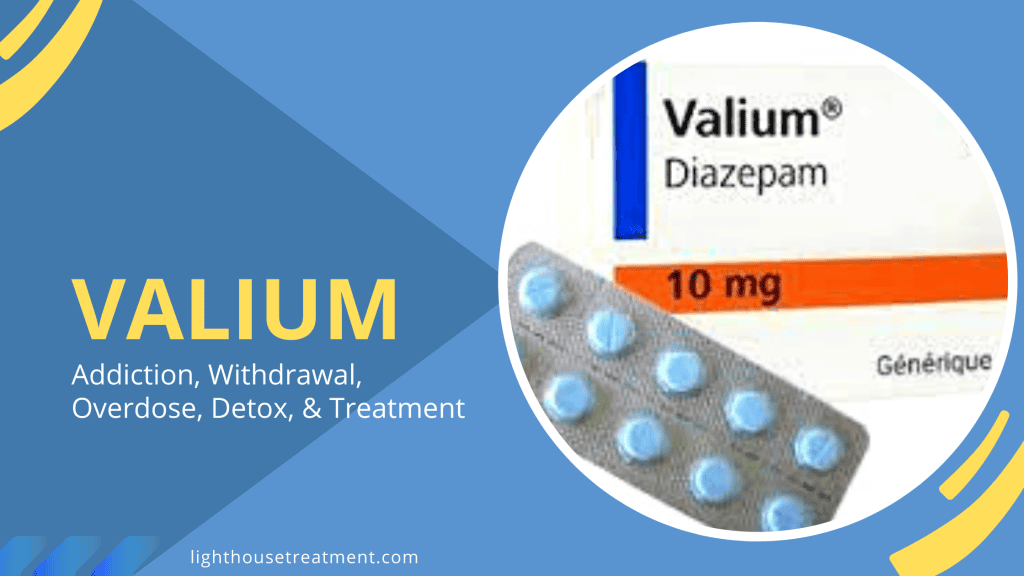
This medicine is available in tablet form in the market with different levels of strength depending on the dosage. The 2mg is white in color, round, and has an imprint of 2 Valium, ROCHE ROCHE.
The 5 mg is yellow in color and round in shape with an imprint of 5 Valium, ROCHE ROCHE. Lastly, the 10 mg is blue in color, round, and has an imprint of 10 Valium, ROCHE ROCHE.
What Is Valium Used For?
The drug helps in treating seizures, panic attacks, anxiety, and alcohol withdrawals. It can also work as a short-acting anesthetic and prevent nausea and vomiting.
The main function of this drug is to relieve skeletal spasms, cerebral palsy, athetosis, and stiff-man syndrome.
Aside from medical use, it is also commonly misused as it can be mixed and combined with illicit psychoactive substances and alcohol.
How Does Valium Work?
It works on the GABA receptor site of the brain located in the limbic system and hypothalamus. When bound, it can stimulate the secretion of the GABA neurotransmitter.
This action then opens the chloride channels and saturates neurons. This instance leads to muscle relaxation and makes brain activity slower.
How Long Does Valium Stay in Your System?
This drug has a long-acting effect on the user. It has a long half-life divided into two stages: the initial distribution phase lasts up to 48 hours while the terminal elimination half-life is around 100 hours.
If a drug test is done it may stay in the blood for 6 to 48 hours. It can be detected in urine for about 1 to 6 weeks, 1 to 10 days in saliva, and up to 90 days in a hair test.
What are the Short and Long-term Effects of Valium?
The drug gives the users a relaxing feeling as it loosens the muscle and the nerves. It also reduces brain activity. Some of its mild symptoms and short-term effects are drowsiness, confusion, and fatigue.
In severe long-term cases, it induces slurred speech, depression, low muscle tone, low blood pressure, short breaths, and coma.
When abused, Valium is dangerous because the excessive dosage of this drug can severely damage the brain. This damage leads to degraded motor skills, psychiatric problems, respiratory failure, coma, and even death.
It induces a euphoric effect when a user combines it with alcohol and other stimulants. When this happens, it can overshadow the medical benefits of the drug.
Is Valium Addictive?
The DEA classifies Valium as a Schedule IV drug, making it a controlled substance. This means it has a lower abuse potential than prescription drugs in Schedule III.
However, the drug can be habit-forming and dangerous especially if mixed with alcohol or other stimulants.
There have been reports of people who have developed tolerance to the drug and have to increase their dosage to experience the same effect. Some people also develop a physical and psychological dependence on it.
When abused, it can lead to addiction. If you try to quit, you can experience withdrawal symptoms.
What Are the Withdrawal Symptoms?
If you don’t use the medication for 1 to 2 weeks, you may start experiencing withdrawal symptoms.
Withdrawal symptoms may include:
- tremors
- stomach cramps
- muscle spasm
- severe anxiety
- restlessness
- confusion
- irritability
- apathy
- hypersensitivity to light and noise
To attain complete recovery, like all drug withdrawal stages, you must undergo gradual step-by-step treatment.
What Causes Valium Overdose?
Valium abuse is often associated with alcohol and stimulant use. Taking Valium with alcohol or drugs or other central nervous system stimulants can cause dangerous side effects or an overdose.
Stimulants include cocaine, methamphetamine, and weight loss supplements containing ephedra or caffeine.
People who abuse Valium might take higher doses than prescribed, take the medication more often than prescribed, or resort to crushing and snorting the pills to get a faster high.
Abusing Valium can lead to serious consequences such as addiction, organ damage, seizures, coma, and death. Taking fake Valium can also lead to accidental overdose.
How Do You Treat Valium Overdose?
The signs and symptoms of an overdose are low blood pressure, muscle spasms, breathing problems, and lack of body coordination.
If such occurrences happen, possible treatments may be available but depend on some factors.
These factors are overdose severity, the present health condition of the patient, and the duration of the overdose.
Some first aid treatments can help if someone overdoses on Valium. If the person is unconscious, you can try to make them vomit within one hour.
If their blood pressure is low, you can give them fluids and monitor their vital signs. Make sure they are breathing enough air.
You can also give them activated charcoal to absorb some of the substance in their body, and Flumazenil to counteract the effect of Valium.
How Do You Treat Valium Addiction? Detox & Treatment
Benzodiazepines are highly addictive and can lead to physical and psychological dependence.
There is no one-size-fits-all answer to valium addiction treatment, as the best course of action will vary depending on your unique circumstances.
However, professional detox and treatment are often necessary to overcome an addiction to this drug.
Detoxification should always be done under the supervision of a medical professional. If you abruptly discontinue the drug, it can lead to withdrawal symptoms that can be life-threatening.
Once detox is complete, ongoing treatment will be necessary to help you stay sober. This plan can include counseling, therapy, and support groups.
Final Thoughts: Addressing Valium Abuse and Addiction
Valium is a useful drug when you use it for medical reasons but it can also be dangerous if abused. Valium addiction is a serious condition that requires professional treatment.
If you or someone you know is struggling with an addiction to this drug, please seek help as soon as possible.