






Don’t see your provider? Contact us to confirm coverage.
Addiction to opioids is a huge problem in the United States. It’s become so serious that it’s been called the opioid crisis. Since the 1990s, many people have developed physical dependence on opioids that were normally prescribed to them as pain medications.
Now, with the rise of synthetic opioids like fentanyl, the opioid epidemic remains a leading cause of drug abuse and overdose deaths in America.
If you’re struggling with opioid abuse, there are different methods available to treat opioid addiction. There are even medications used to treat opioid use disorder, and they are quite effective. One such medication is known as Suboxone.
In this article, we will take a look at Suboxone and its uses, how it works, and the possible short term and long term side effects of using the drug. At the end of this article, you’ll hopefully have a better understanding of what this medication is.
What is Suboxone?
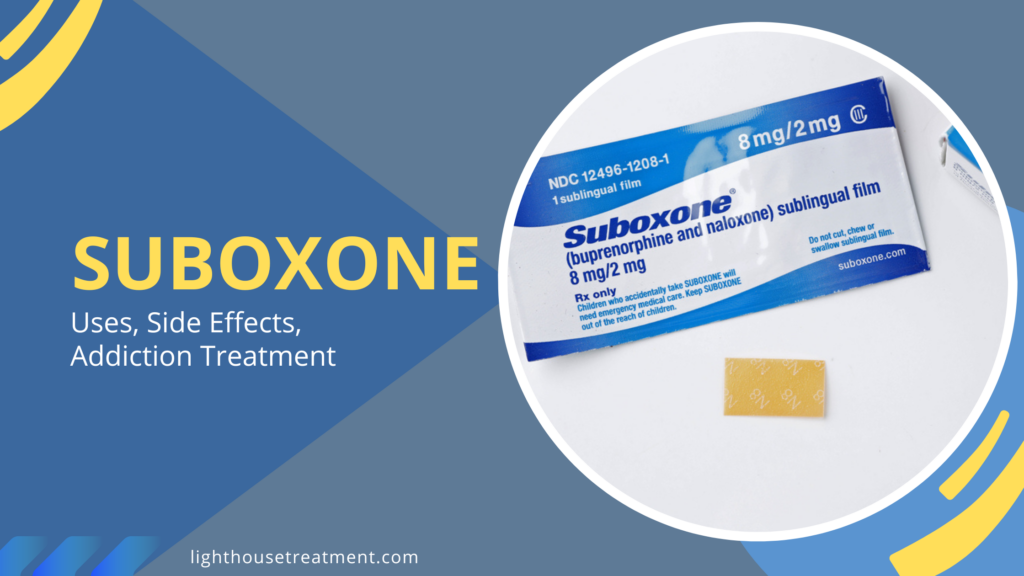
Suboxone is a medication used to treat opioid addiction as part of a Medication Assisted Treatment (MAT) for addiction recovery. It’s a brand name of a drug consisting of two drugs: buprenorphine and naloxone.
The two components combined are very helpful in minimizing cravings for highly addictive opioids like oxycodone, codeine, heroin, and fentanyl.
Buprenorphine is a partial opioid agonist. Partial opioid agonists bind to the same receptors in the brain that opioids do, but produce a much weaker effect.
Because buprenorphine is an opioid itself, you could think of this as fighting fire with fire. With buprenorphine, the risk for addiction is not as pronounced as other opioids.
Naloxone is an opioid antagonist, meaning it blocks the effects of opioids on the body and brain. Additionally, it reverses the opioid effect, so it’s helpful in relieving overdose symptoms.
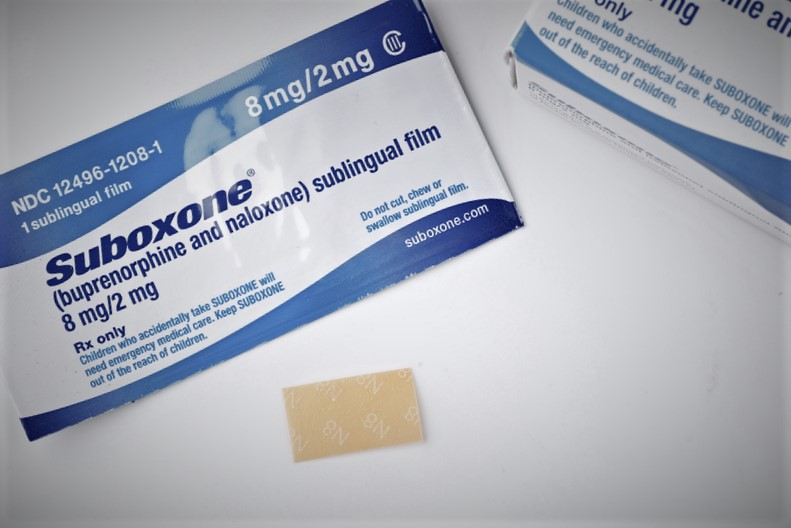
Suboxone is available as a sublingual film. The sublingual film must be placed under the tongue until it fully dissolves. Do not chew or swallow the film because it will not be as effective.
There are also other generic versions of Suboxone. These medications for opioid addiction also have buprenorphine and naloxone as their active ingredients, but the names of these medications may differ depending on their manufacturer.
Can You Get Addicted to Suboxone?
Since one component of this drug is an opioid too, this is a valid question. More so, because buprenorphine is stronger than morphine.
It’s important to note that Suboxone still has addictive potential. Therefore, the DEA classifies it as a Schedule III controlled substance. Thus, you can only get this drug with a prescription.
However, buprenorphine is generally safer because the action of buprenorphine is to block other opioids from sticking to their targets in the nervous system. It also does not cause an intense high, unlike other opioids. Thus, buprenorphine is effective in weaning you off of addictive opioids. Plus, it also helps you manage those pesky opioid withdrawal symptoms.
Buprenorphine has another nice “side effect.” If you’re addicted to opioids, it can satisfy your opioid cravings while not feeding your addiction. It’s a lot like nicotine patches, which smokers use to help themselves quit.
Also, buprenorphine has something called a “ceiling effect.” In other words, if you take larger doses of the drug, you won’t get stronger effects. So, once you’re tolerant to the drug, you cannot overcome the tolerance by increasing your dosage or taking the drug more often.
Does Suboxone Have Side Effects?
Just like other medicines, Suboxone can deliver side effects. Almost all of them are not fatal, though, and they go away after several days.
Here are some of them:
- Fatigue
- Anxiety
- Insomnia
- Muscle pain
- Fever
- Headache
- Nausea
- Sweating
- Depression
When used properly, Suboxone is pretty safe. But, if you take it along with alcohol or benzodiazepines, you could experience more serious side effects.
Also, in some cases, Suboxone can trigger severe allergic reactions. They manifest as swelling in the throat and difficulty breathing. Taking too much Suboxone can damage your liver and cause you to go into a coma. Additionally, you could suffer an overdose too.

What Happens If You Overdose on Suboxone?
In normal situations, the risk for overdosing on Suboxone is low, especially if you follow your doctor’s orders to the letter. But if you do use too much of it, overdose can be lethal. You can also overdose on Suboxone if you combine it with other drugs.
Some of its overdose symptoms include:
- Chills
- Blurred vision
- Confusion
- Anxiety
- Headaches
- Dizziness
- Nausea and vomiting
- Loss of coordination
- Fatigue
- Stomach pain
- Loss of consciousness
- Slurred speech
- Constricted pupils
- Sweating
- Slow breathing
In extreme cases, overdosing on Suboxone can cause a condition called respiratory depression. In other words, it can cause your breathing to slow down or stop completely. If it doesn’t cause death, it can damage your brain or lead you into a coma.
Are There Illegal Versions of Suboxone?
Actually, there are illegal versions of Suboxone. Drug dealers are selling illegal versions of Suboxone in many regions in the US. In Cincinnati alone, police have seized more than 6,000 doses of illegal Suboxone in 2018.
But if Suboxone does not cause a pleasant high, why do people buy it illegally?
Many of those who buy illegal Suboxone do not seek the high. Rather, they are people who want relief when they experience withdrawal symptoms and cravings for opioids.
However, doing this by yourself is not safe. If you haven’t been prescribed Suboxone, it’s best not to take it. Otherwise, you could become dependent on the drug.
Let’s say you don’t enroll in an opioid addiction treatment program, and instead, you opted to take Suboxone regularly. While it does relieve your withdrawal symptoms, it won’t last forever. In turn, you need to keep on taking Suboxone to take away the withdrawal. And this cycle would continue.
Thus, you haven’t solved your addiction problem. Instead, you just made yourself dependent on another drug. In the worst case, you might suffer from an overdose. This is especially true if you don’t have any prescriptions to guide you.
But if you’re under a proper opioid addiction treatment program, at the end of it, you won’t have to take Suboxone anymore.
Is Suboxone Right for You?
Suboxone is an effective addiction treatment medication to help you recover from opioid addiction. However, it’s not suitable for everyone and must only be taken with a prescription.
Before taking Suboxone, you must first consult with an addiction specialist to check if this treatment is right for you.
Always remember that any addiction medicine is only effective if taken as a part of a comprehensive addiction treatment plan that includes proven methods like individual counseling and behavioral therapy. Make sure to seek professional help for the best results.