






Don’t see your provider? Contact us to confirm coverage.
Inhalants are products that we use everyday that seem innocent. But they can be dangerous because we sometimes use them without knowing their dangers.
In this blog post, we will explore the risks associated with inhalant use, the signs and symptoms of addiction, and how to get help if you or a loved one is addicted to inhalants.
What Are Inhalants?
Inhalants are a broad range of common household products that can be sniffed or huffed to produce psychoactive effects. The most commonly abused inhalants include:
While household products such as different sprays and paints may be the most familiar, inhalants refer to a variety of volatile compounds and chemicals, including industrial and medical substances that readily evaporate to a gaseous state at room temperature. This means that they easily emit vapor and as the name suggests, they are rarely taken by any method other than inhalation.
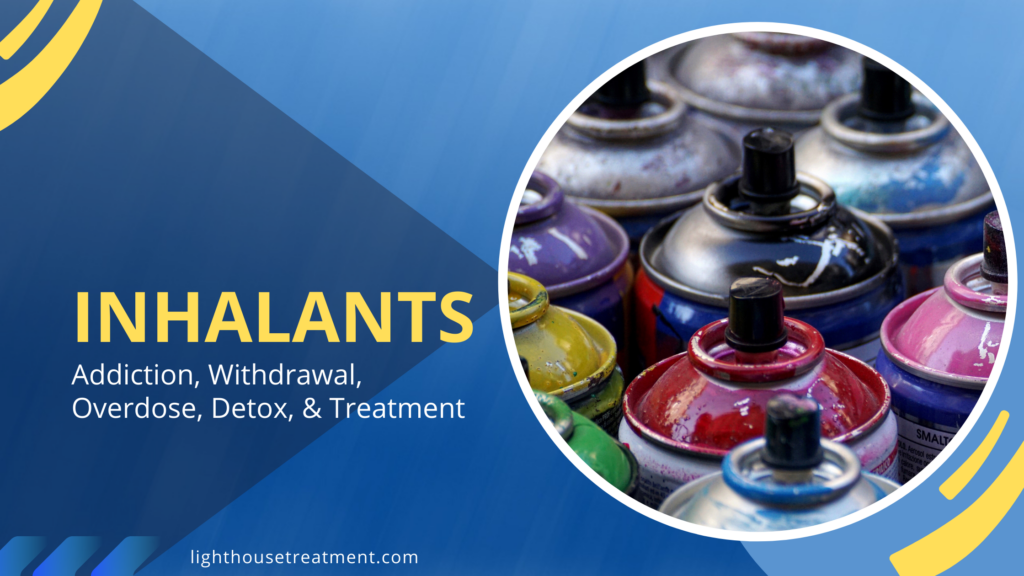
What Do Inhalants Look Like?
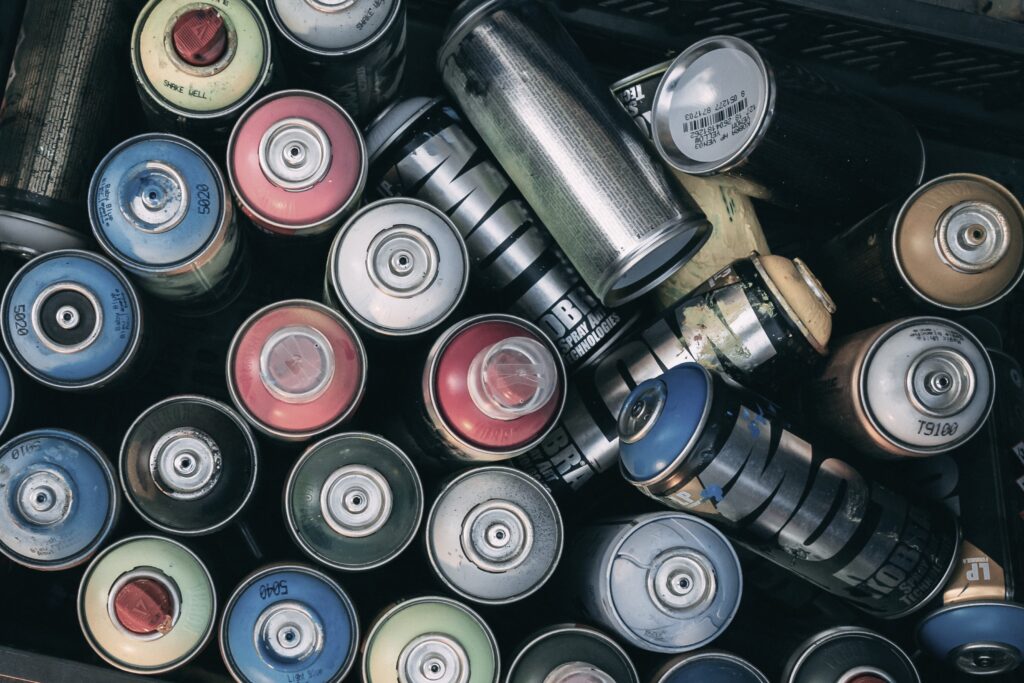
Usually stored in bottles and spray canisters, not much may distinguish an inhalant from other typical grocery items at a mere glance, though they may be packaged in pressurized containers to prevent vaporization.
The NIDA classifies inhalants into four categories – volatile solvents, aerosols, gasses, and nitrites.
1) Volatile Solvents – these are liquid, generally come in larger amounts relative to the others, and can be readily purchased from retail stores. They can dissolve in solute and as inhalants, they can turn to gas at room temperature. Paints, paint thinners, glues, gasoline, dry-cleaning fluids, lacquer thinners, and office supplies like felt-tip markers and correction fluids, are listed under volatile substances.
2) Aerosols – Aerosols cover several spray products, from fabric protectants to air fresheners and even cooking sprays.
3) Gasses – These can be either organic or inorganic and have plenty of households, industrial, and medical applications. Most utilized may be nitrous oxide, popularly known as “laughing gas”, a sedative agent used to put patients in a calmer state for many dental procedures. Nitrous oxide can also be used in whipped cream dispensers as a whipping agent and in race cars to boost octane levels.
4) Nitrites – While inhalants generally impact the brain or central nervous system, nitrites induce muscle relaxation by dilating the blood vessels. Nitrite compounds may be known by such street names as “poppers” and “snappers”. Due to their use in the context of sexual intercourse, they may be associated with increased risks of contracting sexually transmitted diseases.
What Are Inhalants Used For?
Inhalants have various uses depending on the product. However, many people abuse inhalants for their psychoactive effects.
Inhalants are attractive to people who abuse them because they are easy to obtain and relatively inexpensive. The high produced by inhalants is often described as a “rush” because it is short-lived, lasting only a few minutes.
How Do Inhalants Work?
The inhalation method can be through the nose or mouth, facilitated by special masks such as the case with laughing gasses for dental operations, or by more commonplace items from bags and rags to the container in which the product is readily packaged.
For example, in the case of aerosols, users may spray the substance directly into the mouth or nose. Others sniff or snort the substance from small openings in the container or a paper or plastic bag. Nitrous oxides can be sniffed directly from balloons that contain them. Huffing is a method wherein a piece of cloth is soaked in a solvent before being placed into the mouth from where it will be inhaled.
Once inhaled, the chemical can reach the brain through the bloodstream, directly attacking the central and peripheral nervous system and causing intoxication.
How Long Before You Can Feel the Effects of Inhalants?
The effects of inhalants are often felt immediately after inhalation. Mostly, these effects are short-lived, only lasting a few minutes.
For example, the high caused by laughing gas may only last for a minute or two. However, other inhalants like those used in cleaning products can cause longer-lasting effects.
How Long Do Inhalants Stay In Your System?
The instability in the chemical composition of inhalants gives these substances their short lifespan, with two weeks being the average time for this drug to be excreted from the human body through exhalation or urination.
Still, several physiological factors can affect how long inhalants can stay in the system.
Organ health and metabolism are primary determinants, as they determine how efficiently toxic substances can be excreted from the body and otherwise counteracted. Genetics can play a role in a person’s metabolism. Age-wise, younger individuals tend to process chemicals faster since their systems are less likely to be experiencing organ dysfunction and degradation associated with aging.
Weight, height, and body composition also affect the staying time of inhalants in the body. Bigger individuals may be able to take in larger amounts of the drug before such can take effect but may also require larger amounts of medication to counteract the effect of these substances.
What are the Short and Long-term Effects of Inhalants?
Side effects are comparable to those of inebriation, with disturbed speech, uncoordinated muscle movements, and dizziness being probable. Hallucinations and delusions are also possible depending on the amount breathed in. Among the short-term effects of breathing inhalants are headaches, vomiting, mood swings, and the side effects of alcohol intoxication enumerated above.
Meanwhile, long-term abuse of these breathable chemicals can lead to irreparable damage to the nervous system and failure of the kidney and liver, as well as damage in the bone marrow, loss of hearing, and spasms.
The psychoactive properties of most inhalants can have lasting damage to the nervous system. In extreme cases, brain dysfunction can suspend body movements, leading to coma. Brain malfunction through the emission of uncontrolled electrical discharges can cause sudden muscle contractions, producing convulsions or seizures.
Stronger inhalants like toluene and naphthalene can severely damage, and even destroy the nerve endings in the human brain. Individuals who are under the influence of these inhalants are likewise more prone to accidents due to diminished muscle coordination associated with the substance.
Are Inhalants Addictive?
Yes, inhalants are addictive. The sudden high that they induce can lead to compulsive use in an attempt to achieve the same feeling. As with other drugs, a tolerance for inhalants can develop over time, leading users to take in larger and more dangerous amounts of these chemicals.
The fact that these substances are easily accessible and readily purchased increases the risk of dependence, especially for adolescents and younger adults. Reportedly, children as young as twelve have been misusing inhalant substances.
In November of 2018 when a Dutch teen died of cardiac arrest after inhaling a deodorant spray. According to the account published in the BMJ Case Reports, the 19-year-old had draped a towel over his head and inhaled the butane from the spray, after which he became hyperactive and later collapsed, dying only days after he was placed in a medically induced coma.
But this case of abuse is not isolated in the Netherlands. In the U.S., the National Institute on Drug Abuse (NIDA) reports that inhalants, as these potentially psychoactive household products are called, reportedly account for as many as 200 deaths each year.
What Are the Withdrawal Symptoms?
Withdrawal symptoms are also good indicators of whether dependence has developed, so there are signs for which a concerned guardian may want to look out for.
For inhalants, vomiting, appetite loss, sudden mood swings, excessive sweating, and sleep troubles are all possible withdrawal effects one can anticipate during the detoxification process.
What Causes Inhalant Overdose? Signs of an Overdose
Inhalants pose a high risk of overdose, with some substances causing damage more quickly than others even in small amounts. That’s why even accidental inhalation may require immediate medical attention.
As with the case of the late Dutch teen reported to have misused aerosols, cardiac arrest, preceded by fast and irregular heartbeats, is a possible medical consequence of inhalant abuse.
When an excessive amount of the substance is inhaled, such can displace the oxygen in the lungs, causing asphyxiation. These fumes may also block the entry of oxygen into the lungs, thereby causing suffocation. Meanwhile, with vomiting being a side-effect of inhalant intoxication, choking can ensue when the user accidentally inhales the vomit.

What Should You Do If Someone Is Overdosing?
Call emergency services as soon as possible if you suspect that someone is overdosing on inhalants. If the person is not breathing, administer CPR.
If the person is conscious and able to follow your commands, have them sit up and lean forward to prevent vomiting and choking. Once emergency medical help arrives, give them as much information as possible about what substances were inhaled and in what quantities.
How Do You Treat Inhalant Addiction? Detox & Treatment
In ensuring recovery from inhalant dependence, treatment may include medication and behavior alteration. The patient should be able to acknowledge and accept that they indeed developed a dependence on the substances and that help is needed.
Seeking help from a professional addiction treatment is crucial in addressing the problem and coming up with an effective care plan. A comprehensive assessment will be conducted to evaluate the patient’s physical, psychological, and social state. From there, the specialist can better determine what type of treatment will work for the individual.
Final Thoughts: Addressing Inhalants Abuse and Addiction
The accessibility of inhalants makes them particularly attractive to younger individuals who may be curious about experimenting with substances. However, because of the dangers that come with their abuse, it is important to be able to identify the signs early on and take steps to prevent inhalant addiction from developing.
If you or someone you know is showing signs of inhalant abuse, don’t hesitate to reach out for help. Remember, inhalant addiction is a serious problem that should be addressed as soon as possible.