






Don’t see your provider? Contact us to confirm coverage.
Most people know ecstasy as a dance club drug that produces feelings of euphoria and energy. What many don’t know is that ecstasy can be addictive, and that withdrawal from the drug can be difficult.
In this post, we’ll explore the dangers of ecstasy addiction and overdose, as well as the detox and treatment options available to those who want to overcome their addiction.
What Is Ecstasy?
3,4-methylenedioxymethamphetamine (MDMA), also known as ecstasy, was originally intended as an appetite suppressant.
However, between the years 1960 and 1980, the Drug Enforcement Administration announced that the said drug had a high possibility of being abused by the wrong users. It also lacked medicinal value after having seen the effects of it being a party drug.
Nowadays, it is more commonly known to be a psychoactive and stimulant drug because it consists of hallucinogenic properties.
The drug is also called Beans, Candy, Happy Pill, and Molly. XTC, California Sunrise, Love Drug, Malcolm X, and Sweets are also some of its street names.
What Does Ecstasy Look Like?
Ecstasy comes in different forms. One form is ecstasy in a liquid form. This is called GHB, which is clear, odorless, and salty. So if you mix it with other drinks, it won’t be detectable.
When someone takes GHB, they will feel overconfident and emotional. Then they will become sleepy and rested after the effects kick in more deeply.
The second type is in powder form, which is called Crystalline Powder (Molly). This is the purest form of MDMA and it is stronger than when it is in tablet form. The powder form can be made into a pill or it can be mixed with other drugs like methamphetamine, cocaine, and piperazine to create a tablet.
But nowadays, MDMA usually isn’t pure because that makes it stronger and more profitable. So there are lots of different variants of the drug now. Some other substances that are sometimes found in MDMA include ephedrine, piperazine, ketamine, caffeine, and dextromethorphan.
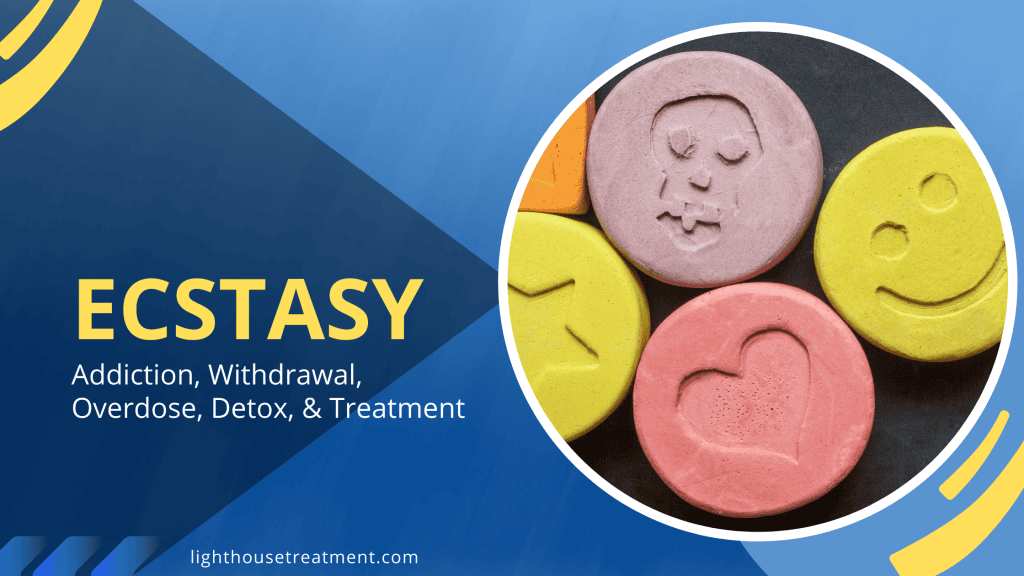
And lastly, you can also find tablets sold as ecstasy. The amount of ecstasy in each tablet can range from 50 to 150 mg. These tablets come in different colors, shapes, and designs.
What Is Ecstasy Used For?
Known for having no medicinal value, the Multidisciplinary Association for Psychedelic Studies (MAPS) still manages to test the drug’s use in relieving sickness and alcohol abuse in clinical trials.
Some people also use it to relieve social anxiety, post-traumatic stress disorders, and anxiety about life-threatening situations and terminal illnesses. Research studies have also shown that MDMA can also be therapeutic for anxiety and PTSD.
Recreational users use the drug to get the psychedelic effects. When people take ecstasy, it can affect them differently.
Some people will feel more energy when they are on the drug. They might also see bright colors and hear loud music. While some people might get a headache or feel sick.
How Does Ecstasy Work?
MDMA, more commonly known as ecstasy, is a synthetic drug that acts as a central nervous system stimulant.
MDMA causes an influx of neurotransmitters, such as serotonin, norepinephrine, and dopamine, which create feelings of happiness, excitement, and increased energy. It also increases levels of oxytocin, which helps to create feelings of bonding and closeness with others.
While the exact mechanism of action is not fully understood, it is thought that ecstasy works by increasing activity at the serotonin transporter protein (SERT), which in turn causes serotonin to be released into the synapse.This action is thought to be responsible for the drug’s antidepressant and pro-social effects.
How Long Does Ecstasy Stay in Your System?
The length of time ecstasy remains in the body depends on where it stays. For example, it can remain in the hair for 90 days, which is longer compared to its stay in the blood or urine.
It can also stay in the urine for approximately five days depending on its pH level. Normally, it can stay for two days but it can also stay for an additional day if the user is less acidic.
Its retention in the kidney can last for 40 hours. Additionally, the drug stays the shortest in the bloodstream as it stays there for only three days.
What are the Short and Long-term Effects of Ecstasy?
When you take ecstasy, you can feel increased energy, pleasure, emotional warmth, and distorted sensory and time perception.
Ecstasy can have short-term and long-term effects on a person. Some of the short-term effects include a quick heart rate, high body temperature, and dilated pupils.
The long-term health effects of MDMA can include changes in the user’s behavior, such as heightened sensations, elevated energy, anxiety, and paranoia.
Is Ecstasy Addictive?
Yes, ecstasy is an addictive drug because the body becomes dependent on it over time. A person who uses regularly will experience a craving for more and greater doses, even if they’ve had their last dose before expected effects from previous use began to wear off.
You can become addicted to something such as ecstasy by constantly being exposed to or coming into contact with the drug. When you’re constantly using a drug, your body will develop a tolerance to it.
This means that you’ll need more of these illegal drugs to get the same effect. As your tolerance builds, you may start to use more of the drug more often. You may also start to feel like you can’t function without it.

What Are the Withdrawal Symptoms?
When you stop taking ecstasy, many symptoms could indicate withdrawal. The most common being fatigue and depression as well as other mental problems.
Other withdrawal symptoms can include attention and memory lapses, mental confusion, lack of motor control, lack of interest in sex, hostility, and panic attacks.
What Causes Ecstasy Overdose?
Ecstasy is a highly addictive drug, and many people who use it regularly will eventually start taking higher and higher doses in an attempt to get the same high they felt when they first used the drug. This can easily lead to overdosing on ecstasy.
Additionally, people who take multiple doses of ecstasy at once (stacking) or mix it with other drugs are also at risk of overdosing.
Ecstasy is notoriously dangerous when mixed with other drugs, particularly alcohol. Alcohol slows down the body’s ability to process and eliminate ecstasy, which can cause dangerously high levels of the drug to build up in the body. This can lead to overdose, as well as other serious health complications.
Symptoms of an ecstasy overdose can include:
- high body temperature
- dehydration
- severe sweating
- hyperthermia
- agitation
- anxiety
- panic attacks
- paranoia
- hallucinations
- delirium
- seizures
- cardiac arrest
How Do You Treat Ecstasy Overdose?
If you or someone you know has overdosed on ecstasy, it is important to seek emergency medical care immediately. Ecstasy overdoses can be life-threatening, and the sooner treatment is sought, the better the chances of recovery.

How Do You Treat Ecstasy Addiction? Detox & Treatment
Ecstasy addiction can be a challenging addiction to overcome. Professional addiction treatment and detox facilities are the best way to overcome an ecstasy addiction, as these facilities can provide the necessary support and resources to help you through the detoxification process.
Withdrawing from ecstasy can be difficult and uncomfortable. However, with professional help, you can overcome your addiction and begin living a healthy life free from drugs.
A good detox program will monitor your vital signs and keep you safe while your body goes through withdrawal.
They will also provide support and guidance to help you through this tough time. After detox, it is important to seek out ongoing drug treatment to maintain your sobriety.
Final Thoughts: Addressing Ecstasy Abuse and Addiction
If you or someone you love is struggling with ecstasy abuse or addiction, it’s important to seek professional help as soon as possible. Ecstasy addiction is a serious problem that can lead to life-threatening consequences if left untreated.
However, with professional treatment and support, you can overcome your addiction and start living a healthy, drug-free life.