






Don’t see your provider? Contact us to confirm coverage.
What do you know about LSD? It’s a psychedelic drug that can cause hallucinations. But what else? How does it work? Can it be dangerous?
In recent years, LSD has made a comeback as a popular drug choice among young people. What many don’t know, however, is that there are inherent dangers associated with taking this drug.
In this blog post, we will explore the risks of using LSD. We’ll talk about the effects it has on the body and mind, as well as its dangers. So if you’re curious about this powerful psychedelic drug, keep reading.
What Is LSD?
LSD stands for Lysergic acid diethylamide, a hallucinogenic drug that has mood and psychedelic properties used for recreational and occasional spiritual purposes.
The drug can induce mild alterations to the brain’s way of thinking, perceiving, and mood functioning even when it is taken in small doses. There is a high chance of experiencing spatial and time distortions as the dosage increases.
LSD is made from the lysergic acid of ergot, a fungus growing on rye. Its illegality is due to its high level of abuse and its Schedule I drug classification. Medical doctors and professionals have decided that it is dangerous in most countries.
Apart from its abbreviation, LSD can be called several names including Acid, Window panes (gelatin squares), Sugar cubes, Yellow sunshine, Dots, Microdots, Lucy, Tab, and Looney Tunes. More uncommon terms are Backbreaker, Battery acid, Boomers, Boomers, Doses, Elvis, Golden Dragon, Seed, Superman, Trips, and White Lightning.
Other types of LSD involve the combination of other drugs to add to their potency and after-effects. These are Candy Flipping/Troll (acid + Ecstasy), Frisco special (acid + cocaine), Frisco speedball (acid + heroine), and Banana split (acid + nexus).
What Does LSD Look Like?
In its purest form, LSD appears as a white and odorless crystalline. It can be crushed to a powder or be equally potent as a liquid drug. Its liquid form is characterized as colorless and bitter. For transport and preservation, they are kept in vials, small bottles, or frozen into ice cubes. LSD can also take the form of small tablets/capsules or as an intravenous solution that can be injected or dissolved into drinks.
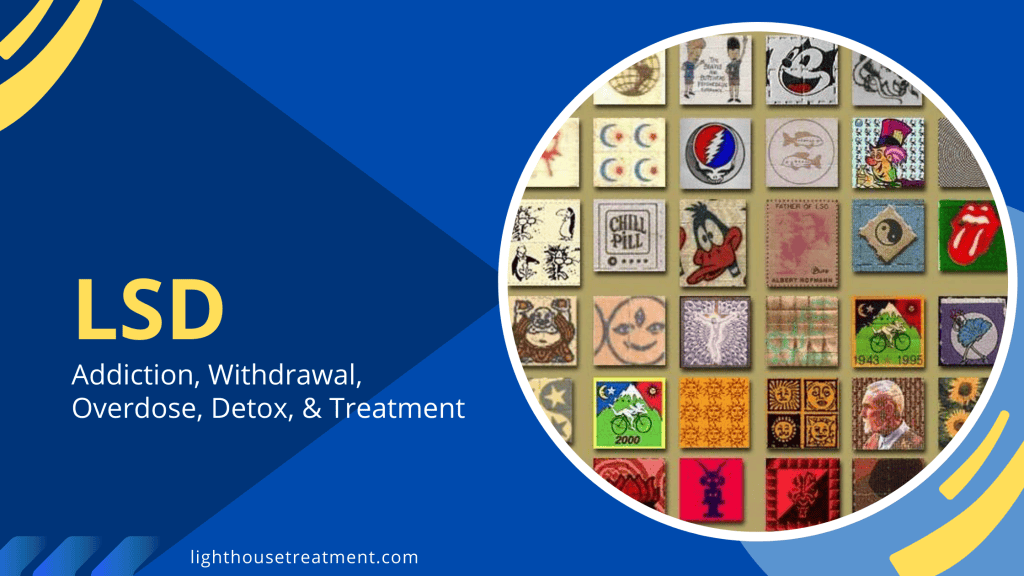
The drug is also available as gelatin squares (also called window panes). These are absorbent, blotter-looking sheets divided into small squares that form a puzzle design or cartoon character.
When dipped in acid solution, colorful graphics are printed and perforated to a quarter of an inch (6.35 millimeters wide). One square holds the equivalent of a single small dose while a sheet is made of 900 doses.
What Is LSD Used For?
Initially, LSD was once seen as a dependable and possible cure for treating different kinds of mental and psychological disorders similar to prescription drugs.
The trademark effect of LSD is a trip. A trip is a sensory perception that expands from the consciousness to the boundaries of reality, giving a feeling of transcendence. An LSD trip makes the user more relaxed and sociable. Negative effects of the drug, on the other hand, can lead to unsure and panicked feelings that affect one’s state of mind. Because of these effects, some people use LSD for self-exploration and recreation.
LSD is also used to heighten senses, increase confidence, reduce inhibitions and stimulate sexual arousal. LSD has become a symbol for youth counterculture from the 1960s until the present. Popular icons in the arts admit to having used the drug for artistic motivation.
How Does LSD Work?
How does LSD work? This is unknown, but it is thought that it increases glutamate release in the cerebral cortex. This increase in glutamate then leads to more excitement in this area.
When people take LSD, they can experience changes in their senses and an altered sense of time. Some people feel as if they are in a dreamlike state. Other effects that have been reported include:
- hallucinations
- increased heart rate and blood pressure
- dilated pupils
- nausea
- loss of appetite
- sweating or chills
How Long Before You Can Feel the Effects of LSD?
LSD trips can range from being extremely relaxed to being exhilaratingly high. These can last from 6 to 8 hours where the mind jumps from idea to memory, eventually temporarily distorting perception.
These trips can be good or bad on the effects that they leave on the body. A trip’s physical symptoms are non-specific and are dependent on the individual. Initial reactions are dilated pupils, loss of appetite, restlessness/sleeplessness, and sweating.
How Long Does LSD Stay In Your System?
There are a few different ways to test for LSD in the body – through blood, urine, and hair. Results will vary depending on the type of test and the length of time it is conducted after ingesting the drug.
Generally speaking, a blood test will show positive results for LSD within 6-12 hours after use. A urine test will show positive results for up to 8 hours. A hair test will show positive results for up to 90 days.
Blood test – 6-12 hours
Urine test – 8 hours
Hair test – Up to 90 days
What are the Short and Long-term Effects of LSD?
The effects of LSD on the body are sensory and psychological. The individual loses a significant amount of brain cells after using the drug; the memory retrieval and cognitive function in the mind are permanently impaired.
These damages will have a long-term impact on the individual. In addition, LSD’s specific chemical effect on the brain is cutting off the area responsible for immediate input. Any recent experiences stored and exaggerated are made responsible by the drug.
Other physical symptoms are salivation or dry mouth, blurred vision, tingling fingers/toes, fatigue or weakness, dizziness, sweating and chills, inability to perform tasks that can easily be done, coordination issues, evidence of convulsions, an extreme swing of body temperature, tremors, and appetite.
The extreme end to LSD is abuse, becoming dependent and addicted to the point of not being able to distinguish ideas and images from the present reality.
For behavioral symptoms, emotional distress, paranoia, anxiety, depression, and disorientation are signs to look out for LSD consumption. Another type of effect LSD has on the body are constant flashbacks of past memories coming back to the person and eventually leading to what is called a crazed state. A crazed state is when the shifting of visions becomes too strong that it affects the remembering of actual experiences.
When abused regularly, LSD can affect one’s daily routine and activities through occasional psychological disorders, paranoia, and psychosis.
Is LSD Addictive?
While LSD is not generally considered physically addictive, it can lead to compulsive use. This can be damaging to your personal and professional life.
After taking LSD for the first time, some people feel happy and excited. But after a while, the person’s body starts to get used to the drug. Then they need more of it to feel the same effects.
If you take LSD often, even small doses can make you tolerant of the emotional and psychological side effects. This is because the drug’s hallucinogenic chemicals stay in your body for a long time after you take them. And they can cause permanent brain damage and distortion.
If you can’t control your urge to take LSD, it’s important to get help from a treatment program that specializes in LSD addiction.
What Are the Withdrawal Symptoms?
Since LSD is not a physically addictive substance, there are no typical withdrawal symptoms associated with its use. However, that doesn’t mean that discontinuing LSD use doesn’t come with its own challenges.
People who have been using LSD regularly can often feel profoundly unhappy and anxious when they stop taking the drug. They may also experience psychotic symptoms such as paranoia and delusions. These mental challenges can be extremely difficult to deal with, particularly if the person does not have a strong support system in place.
What Causes LSD Overdose? Signs of an Overdose
LSD overdose is very rare, but it can happen. However, because LSD alters perceptions and judgment, there is always a risk of doing something while on the drug that could potentially lead to injury or death, like driving a car or swimming in a dangerous body of water.
Some signs that someone might be experiencing a bad trip from LSD include feeling anxious or panicky, having a rapid heartbeat, feeling confused or paranoid, and seeing or hearing things that aren’t there.
What Should You Do If Someone Is Overdosing?
If you suspect that someone is on a bad trip from ingesting LSD, get medical help. While the person may not overdose on the drug itself, it’s important to keep them safe and supervised until the effects of the drug have worn off.

How Do You Treat LSD Addiction? Detox & Treatment
Just because LSD is not physically addictive, this does not mean that treatment is not necessary for those who have developed a compulsive use disorder.
Because LSD can cause profound changes in perception, judgment, and behavior, it’s important to get help from a specialized treatment program that can address the unique challenges associated with this type of addiction.
Seeking help from a professional addiction treatment center is crucial. The treatment center will have a team of experts who will assess the patient’s condition and create a customized treatment plan. The treatment plan may include therapy, medication, and other interventions.
Final Thoughts: Addressing LSD Abuse and Addiction
There are a variety of addiction treatment centers that can treat LSD abuse. However, the most important factor in treating an LSD addiction is to address the psychological factors that led to the addiction in the first place.
Many people turn to LSD as a way to self-medicate or cope with emotional problems, so it’s essential to address those underlying issues to break free from the cycle of addiction.