






Don’t see your provider? Contact us to confirm coverage.
DMT is a powerful psychedelic drug that can induce hallucinations and euphoria. Although it has been used for centuries in religious ceremonies, its use in the modern world is controversial.
There is the danger of experiencing adverse effects such as anxiety, confusion, and paranoia. Despite these risks, many people continue to use DMT.
If you are one of them, or if you are concerned about someone who is using DMT, it is important to know about addiction, withdrawal, overdose, detox, and treatment. This article will provide you with information on all of these topics.
What Is DMT?
N, N-Dimethyltryptamine (DMT) is a Substance I hallucinogen derived from the alkaloid tryptamine. The drug is found in plants and animals and its symptoms are most intense on the first intake.
In small doses, the drug has a calming effect on the body before the peak sensation of an intense trip that defines its potency.
A trip (also known as a psychedelic experience) is a state of temporary consciousness shift associated with experiencing ‘transcendence’ brought by drugs.
Dimethyltryptamine is not the only name referring to DMT. Its other scientific names are 3-(2-dimethylaminoethyl)-indole, Desoxybufotenine, and N, N-dimethyltryptamine.
Colloquial terms would include names like Ayahuasca, Business trip, Dimitri, Fantasia, Forty-Five-Minute-Psychosis, and Nigerine.
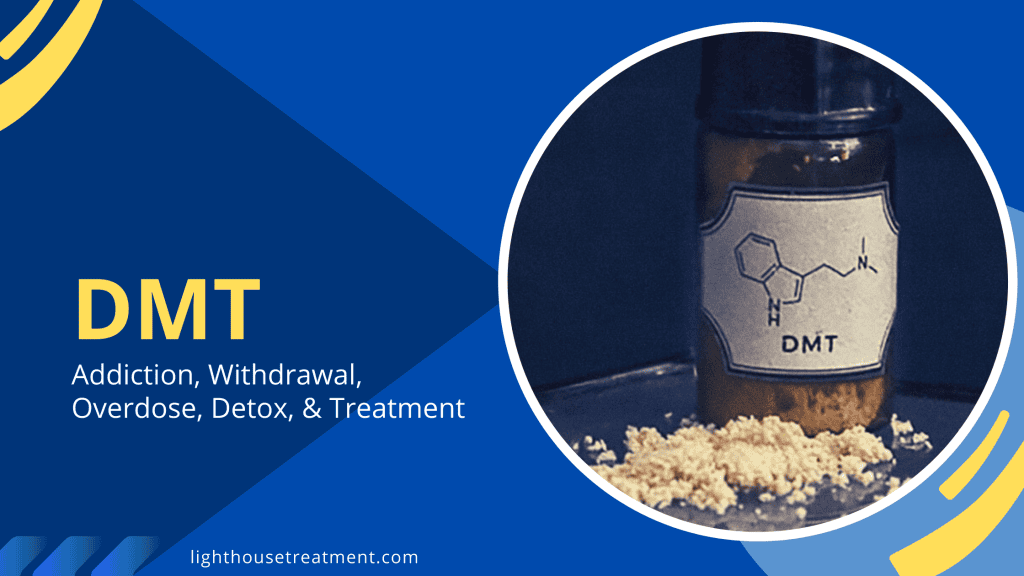
What Does DMT Look Like?
In its purest form, Dimethyltryptamine appears as a crystalline powder. Its consistency looks similar to a snowflake when placed under a microscope.
It has a clear general appearance but it turns crystal once it is vaporized. Mixed DMT variations have a waxy texture when placed in water. They appear with general colors of yellow and brown that suggest that the drug was mixed with plant fat.
Other hues of purple, pink and amber-red are also not purified and can hint at the presence of lye. The presence of these colorations can pose harmful effects to the body if ingested and damage the lungs.
What Is DMT Used For?
On some occasions, this hallucinogenic drug is used for ritualistic healing. Unfortunately, there has been limited research on DMT and its other effects.
It can pose threats to a person’s mental and psychological capabilities and can be unpredictable in filtering the imagination due to its potency. Users with heart ailments are asked to discontinue the drug.
There are two common ways of taking DMT: it can be done by smoking an herbal mixture. After drinking, the drug gives a peak subjective experience of 2 minutes and complete relief of 15 to 20 minutes.
Another way of intake is by drinking ayahuasca brew. Its effects can kick in one hour after it is taken and can last several hours after.
A person’s reaction to DMT reaches a maximum peak of 15 to 20 minutes and can stay inside the body for at least 3 to 24 hours.
How Does DMT Work?
When DMT enters the system, it often targets serotonin, a neurotransmitter responsible for good mood.
It also impacts the neocortex where memory, reasoning, and decision-making are processed. The drug triggers emotions and also affects the way we think. Because of this, it changes the way our emotional memories work and the way we make decisions.
As the substance is absorbed, the user then encounters transient states of anxiety and euphoria either simultaneously or at the same time.
How Long Does DMT Stay in Your System?
Most standard drug tests do not look for DMT. However, it can be detected in the system using different methods.
Depending on how much and how often the drug is taken, the following drug test methods can detect DMT in your system for the following periods:
- Blood Test – 1 to 2 Hours
- Saliva Test – 1 Hour
- Urine Test – 24 Hours
- Hair Test – 90 Days
What are the Short and Long-term Effects of DMT?
The way the body reacts to N, N-dimethyltryptamine is similar to how it does with LSD. The main effects of this drug are psychological and users experience having kaleidoscopic displays of abstract images in technicolor. Auditory and touch hallucinations such as altering temperatures of heat and cold are also common
Heightened states of experiences when taking DMT become more intense as the dose and the frequency of taking the drug increase.
The effects, as users describe, are reported to be unreal and out of the body–with interactions with other entities and aliens–that can be in the form of animals and objects.
Biological changes caused by DMT suggest a change in the hormones of adrenocorticotropic hormone, prolactin, and beta-endorphin.
These are followed by other physical changes such as dilated pupils, increased or irregular heart rate, rapid eye movement, racing blood pressure, chest pain or tightness in the chest region, agitation, dizziness or nausea, high fever, and anxiety.
Is DMT Addictive?
You’ll be surprised to know that DMT has no record of being addictive but like any other drug, higher doses of intake generate more negative effects. While research suggests that DMT does not cause cravings, it’s still possible to be psychologically dependent on the drug.
People who take DMT often say that the experience is so intense that they feel like they have been transported to another realm and that it is impossible to come back to reality.
Wanting to feel these effects, again and again, can cause a person to use DMT habitually.
Like all other narcotics, N, N-Dimethyltryptamine can be illegal in most countries because of its negative effects and symptoms in the body.
Because of its Substance I classification by the Substances Controlled Act, there is difficulty in gathering information and research regarding the narcotic.
Its psychedelic potency has made it a drug to be avoided by the FDA (Food and Drug Administration) and DEA (Drug Enforcement Administration).

What Are the Withdrawal Symptoms?
Some people who use classic hallucinogens may not experience severe withdrawal symptoms, but they may feel an uncomfortable comedown.
The comedown is a phase of drug withdrawal where the drugs are leaving the body. In this phase, you may feel tired and miserable.
There have also been reports of a DMT comedown occurring suddenly after tripping. You can feel anxiety, fear, confusion, and feeling unsettled during the comedown. You may also have trouble focusing and sleeping for several days.
What Causes DMT Overdose?
An overdose happens when you take too much of a certain drug. While DMT is not usually considered toxic, an overdose may occur if it’s mixed with other substances.
Even if DMT users hardly crave the drug, they may experience negative symptoms. The existence of the symptoms means that the substance has been abused for some time and has become toxic to the person.
Life-threatening symptoms include seizures, respiratory arrest, coma, persisting psychosis that includes disordered moods and thoughts, paranoia, visual disruptions, hallucinogen persisting perception disorder (HPPD), symptoms similar to brain tumors, and cerebrovascular trauma.
How Do You Treat DMT Overdose?
There is no standard treatment for DMT overdose because there is not enough research on the drug.
The best way to treat an overdose is to go to the emergency room as soon as possible. The staff will be able to monitor your vital signs and give you supportive care.

How Do You Treat DMT Addiction? Detox & Treatment
For those who have become dependent on DMT, there are several ways of treating and beating this chronic, potent drug. This detox and treatment plan often involves family and individual counseling, cognitive/dialectical behavioral therapy, and a recovery lifestyle.
Individual and family counseling are one-on-one discussions that are conducted with the patient and their peers and family. In the sessions, the involved parties and the medical professional identify the factors that make up the addiction.
When dealing with the drug’s psychological symptoms, cognitive or dialectical behavioral therapy can be a chosen option in one’s treatment program.
Because DMT can increase mood swings and depressive behavior, this kind of therapy can encourage a positive way of thinking.
Assessing dialectical behavior encourages the patient to focus on what they want in life and to reflect on difficult times relating to inner fears and doubts that could lead to a transformation in self-identity.
Final Thoughts: Addressing DMT Abuse and Addiction
DMT abuse can be difficult to overcome without professional help. If you or a loved one is struggling with DMT abuse, don’t hesitate to reach out for help.
There are many detox and drug addiction treatment centers that can help you get on the road to recovery. With the right support, you can overcome your addiction and lead a healthy, happy life.