





Don’t see your provider? Contact us to confirm coverage.
Halcion is a benzodiazepine, which is a type of tranquilizer. It’s prescribed to treat insomnia and sleep better. But like all medications, there are risks associated with taking the drug.
In this post, we’ll go over everything you need to know about this medication, from how it works to potential side effects. We’ll also give you some tips for using Halcion safely and effectively. So if you’re curious about this popular sleep medication, keep reading.
What Is Halcion?
Halcion, known by its generic name triazolam, is a prescription medication that is used for sleep problems. It can help you fall asleep faster, stay asleep longer, and lessen how often you wake up during the night. It belongs to a class of medications called benzodiazepines, which are a type of sedative-hypnotic.
Halcion is an alcohol-soluble crystalline powder that is less soluble in water. It goes by several other names, including Apo Triazo, Trilam, and Alti-triazolam.
Street names such as “Sleepers”, “A-” and “Up Johns” may all be related to the drug.
What Does Halcion Look Like?
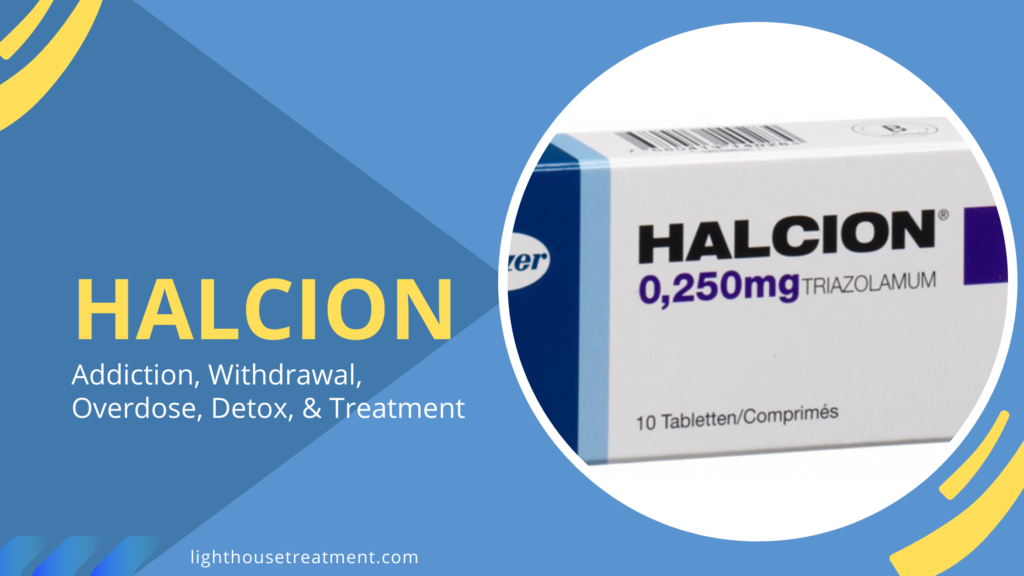
Halcion is often sold in blue tablets. The tablets are elliptical in shape and have the imprint “HALCION 0.25” on them. This means that each tablet has 0.25 mg of its active ingredient. The amount is the recommended dose for adults.
The blue coloring is from a food-grade dye (No. 2 Blue). The dye is one of the inactive ingredients, which also includes lactose and cornstarch. Magnesium stearate is a flow agent used in preventing capsules from sticking to machinery and storage units during the drug manufacturing process. Silicon dioxide and sodium benzoate help ensure freshness and prolong shelf life respectively.
What Is Halcion Used For?
Halcion helps people sleep by making it easier to fall asleep and stay asleep. This sedative can help lessen how often you wake up during the night. People who have difficulty falling asleep, have trouble staying asleep, or often wake up during the night may find relief.
Triazolam is one of the several tranquilizer drugs under the benzodiazepine class, known for their sedative-hypnotic effects and use in anxiety medications.
People usually take it for 7-10 days to help with insomnia. It usually starts working within 10-15 minutes, but the best effects usually happen after 1.3 hours.
How Does Halcion Work?
Benzodiazepines are drugs that target the GABA-A-chloride-ionophore receptor site. When they bind to this receptor, it stimulates gamma-amino-butyric acid, which is a neurotransmitter that helps to inhibit nerve activity in the human nervous system.
This chemical reaction opens the chloride channels, which allows interaction between chloride ions and neurons. This, in turn, results in a decrease in cerebral activity and relaxation of the muscles. This encourages resistance to an excitation state.
This mechanism makes the drug a good sleep aid and premedication for medical procedures.
How Long Does Halcion Stay in Your System?
Even though Halcion’s half-life is short, between 1.5 and 5 hours, it can still be detected in your system up to 90 days after you take it.
Blood tests can find it 2 or 3 days after you take it. Urine tests can find it 3 to 6 weeks after you take it. And hair tests can find it 3 months after you take it. But saliva tests are not good for finding the drug in your system.
What are the Short and Long-term Effects of Halcion?
Halcion can cause drowsiness, confusion, and low blood pressure as short-term side effects. You may also experience brief blurring of your vision, mood swings, and tremors.
Because of these side effects, do not take this drug if you need to be fully awake. It can be problematic if you’re operating machinery. You could also end up sleep driving if you take it in the daytime.
People who are interested in using it to improve their sleep may be worried about the long-term effects of the drug on brain function. These effects can include gradual memory loss.
Muscle relaxation can lead to a loss of muscle control. Plus, using a sleeping aid for a long time can cause problems like parasomnia.
Drug tolerance and dependence are causes for concern, with addiction also in the cards when the drug is ingested more than prescribed dosages.
Drug tolerance and dependence are also possible. Addiction is a possibility when people take more of the drug than they are supposed to.
Is Halcion Addictive?
Yes, Halcion can be addictive and habit-forming.
The drug is classified by the Drug Enforcement Administration (DEA) as a Schedule IV controlled substance. This means that it has a relatively low potential for abuse. However, taking a higher dose with or without a prescription of this sleeping pill increases the risk of addiction.
Although 0.25 mg is the recommended dose for adults, some people may only need a 0.125-mg dose. In fact, taking more than that amount without a prescription can leave you susceptible to tolerance and physical dependence.
It is sometimes used with other drugs to make them more powerful. Some people use it to heighten the euphoric effects when they drink alcohol or take cocaine or heroin.
What Are the Withdrawal Symptoms?
If a person becomes dependent on it, they will find it difficult to control their use of the drug and will also experience withdrawal symptoms 1 to 2 days after they stop using it.
Since the drug is primarily taken to help you sleep, when you stop taking it you may have a hard time falling asleep. This is called rebound insomnia.
You may also have cramps, nausea, and excess sweating. Psychoactive drugs that affect muscle function can also cause involuntary shaking and convulsions.
What Causes Halcion Overdose?
This medication can be abused, which can lead to overdoses. If you overdose on it, you can go into respiratory failure or even a coma. It is important to be aware of the symptoms of an overdose because it can be life-threatening.
Extreme sleepiness, confusion, poor muscle coordination, trouble breathing, and difficulty speaking are also warning signs of an overdose.
If you notice any of these signs, call your doctor immediately.
How Do You Treat Halcion Overdose?
What can you do if you overdose on Halcion? Depending on how severe and for how long the overdose lasts, some treatments can help.
Activated charcoal can help absorb some of the substances in the body. This is helpful if the person took more of the drug than prescribed. Other methods can be used to counteract the effects, like flumazenil or romazicon.
If those don’t work, dialysis or IV therapy might be necessary.

How Do You Treat Halcion Addiction? Detox & Treatment
Dependence on this benzo can be treated. It is important to consult with medical professionals to get the best drug recovery treatment. If you are planning to detox from the drug, we recommend consulting with a detox facility.
There are many types of medication that your doctor may prescribe. Some of these include flumazenil and activated charcoal. However, these are not the only options.
Your doctor may also prescribe the tricyclic antidepressant Tofranil (Imipramine). This drug is used to treat addiction-induced depression. Another possible medication is the anticonvulsant Tegretol (Carbamazepine). This drug has an anxiolytic effect, which means it helps reduce anxiety.
The treatment process for addiction is not only about taking medication. Cognitive Behavioral Therapy may be used to treat drug abuse. CBT is a type of psychotherapy that finds out what makes someone want to take drugs. Then it helps them find healthy ways to cope so they don’t feel the need to take drugs anymore.
Sometimes an action plan is needed to identify and address the root cause of the addiction. This can help control behavior related to the addiction. For example, a system that rewards patients for not using the substance can encourage recovery.
Additionally, a recovery group lets patients commune with others who have had similar experiences.
Final Thoughts: Addressing Halcion Abuse and Addiction
As we’ve seen, Halcion abuse and addiction can be a serious problem. If you or someone you know is struggling with an addiction, please get help. There are many resources available to you, including rehab centers, support groups, and therapists.
Reach out for help today and start your journey to recovery.