





Don’t see your provider? Contact us to confirm coverage.
Ativan is a powerful benzodiazepine used to treat a range of conditions, from anxiety and panic disorders to seizures. It’s important to understand the risks associated with Ativan use before you start taking it.
This blog post will provide an overview of Ativan, including its side effects and dangers. If you’re thinking about taking Ativan, talk to your doctor first.
What Is Ativan?
Ativan is a potent anxiolytic medicine classified under the class of benzodiazepine. It is pharmaceutically known for its generic name lorazepam.
Ativan, first approved by the Food and Drugs Administration (FDA) is categorized as a regulated medicine. It is prescribed by physicians who have obtained special licenses to prescribe regulated medicine and strictly dispensed by pharmacists.
Ativan has gained few street names. Some of the street names of Ativan are Benzo, Blue V, Candy, Downers, Sleeping Pill, Sleeper, and Trank. These names, however, are not being used in the field of medicine.
Like any other medicine, it has different pharmaceutical excipients. An excipient is an inactive ingredient that holds the tablet to ensure the safety, quality, efficacy, and efficiency of its active ingredient.
It contains lactose monohydrate acting as a diluent, magnesium stearate as a glidant, microcrystalline cellulose as a binder, and polacrilin potassium as a disintegrant.
Knowing these components is important as this may help your physician and pharmacist know whether you may develop an allergic reaction.
What Does Ativan Look Like?
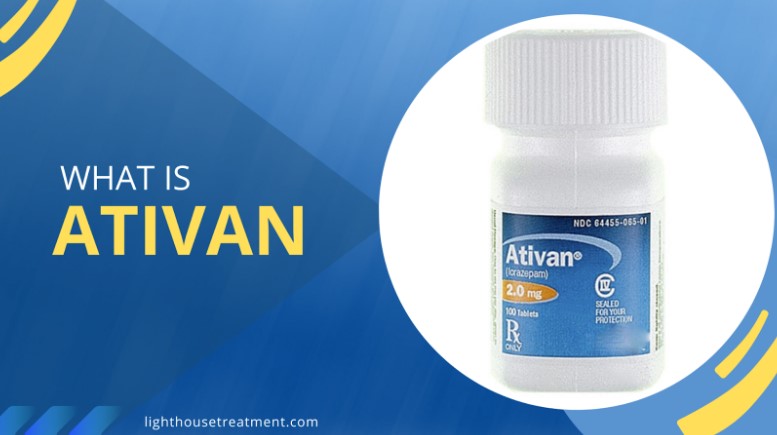
Ativan’s active ingredient and generic name, lorazepam is a fine white powder that is slightly soluble in water. You can find the drug on the market as a tablet based on its dosage form. The dosage strengths are 0.5 mg, 1 mg, and 2 mg.
The different dosage strengths have distinct imprints and features.
The 0.5 mg strength five-sided white tablet has an imprint “A, BPI 63” on its surface.
The 1 mg strength, still a five-sided white table has two kinds. The imprints are different: “A, BPI 64” and “A, 64 WYETH.”
While the 2 mg strength, also a five-sided white tablet, has an imprint on its surface “A, BPI 66.”
What Is Ativan Used For?
When Ativan had not been labeled as a regulated drug, it was both used for medical and recreational purposes.
A few of its medical uses include:
- short-term treatment for symptoms of anxiety disorders
- acute relief from panic attacks
- short-term medication for insomnia
- an adjuvant drug for people experiencing nausea and vomiting due to chemotherapy
- treatment for seizures
- act as muscle relaxants
Ativan is used for a long-term regimen schedule, approximately up to four months. However, medical practitioners should practice precaution and additional drug monitoring of the patient.
The drug monitoring has to be done at a specific time interval. This helps the health practitioners carefully monitor the patient and his response to the drug.
How Does Ativan Work?
Given the fact that Ativan is a potent medicine, how does this minute substance cast its effect on users?
The human brain heavily depends on brain signals called neurotransmitters to relay a message. Neurotransmitters vary from each other, likewise, their effects.
One of the important neurotransmitters is the Gamma-Aminobutyric Acid (GABA), a chief inhibitory neurotransmitter that relaxes neural activities. It does so by increasing the chloride ion influx inside the cell, thus, relaxing the nerve and eventually the brain.
Ativan, on the other hand, potentiates the effect of GABA in the brain. Ativan specifically binds to the beta subunit found on the receptor where GABA produces its relaxation effect.
By that virtue, Ativan lengthens the duration of GABA binding to its active site. It eventually makes the central nervous system in a relaxed state.
How Long Does Ativan Stay in Your System?
The average half-life of this drug is 12 hours. Half-life means the time it takes to eliminate half of the dose administered to the patient.
For example, if you take a 2 mg Ativan tablet, it will take 12 hours to eliminate the 1 mg (half of the dose administered). Meanwhile, lorazepam glucuronide, its metabolite, has a half-life of 18 hours.
Depending on the user’s metabolism, the rate of elimination and half-life may still vary.
In drug testing, lorazepam and its metabolite are detectable on different tissues and fluids.
- In the blood, its presence lasts up to three days.
- In the urine, its presence lasts up to six days.
- In the saliva, its presence lasts up to eight hours.
- While in the hair, the presence of lorazepam lasts for four long weeks.
What are the Short and Long-term Effects of Ativan?
Ativan is dangerous for two primary reasons. First, it has adverse effects in higher doses. And second, it has fatal drug-drug interactions.
When taken with Loxapine, another depressant drug, the depressant effect of Ativan is magnified. Other substances that may magnify the effect of Ativan are neural depressants like alcohol, antipsychotics, barbiturates, sedatives, narcotics, anticonvulsants, and anesthetics.
Even simple over-the-counter analgesics and antihistamines can react to the drug. Magnified effects of Ativan may lead to respiratory depression.
Suicidal behavior, coma, lowering of platelet count, and decrease of granulocyte white blood cells are the common adverse effects of Ativan.
Short-term effects of Ativan are feeling of light-headedness, muscle weakness, disorientation, and loss of appetite. Ativan has also shown potential fetal damages. It is not suited for nursing mothers. If you plan to become pregnant, avoid this drug.
The long-term effects are:
- poor body coordination
- poor body strength
- vertigo
- nausea
- vomiting
- jaundice
- difficulty in speaking
- photosensitivity
Is Ativan Addictive?
Yes, Ativan can be addictive. Even if it has legitimate medical uses, it can be habit forming.
The drug should only be prescribed for 2-4 weeks to prevent dependence and withdrawal symptoms. Monitoring drug intake closely is also important, as taking too much of a drug can lead to addiction.
A person who abuses the said medicine for more than four weeks increases the risk of becoming dependent on the substance. People with a history of alcoholism usually have a high chance of developing an addiction to this regulated drug.
What Are the Withdrawal Symptoms?
Sudden cessation of the drug may lead the person to experience withdrawal symptoms.
Several withdrawal symptoms are as follows:
- trouble sleeping or sleep apnea
- irritability
- increased anxiety level
- panic attacks
- uncontrolled sweating
- poor focus
- frequent headaches
- muscle spasm
- insomnia
- unstable mood swings
What Causes Ativan Overdose?
Lorazepam overdose usually occurs when one intakes more than the prescribed dose. A high dose of lorazepam is above the general dose of 2-8 mg. Excessive intake due to recreational purposes causes overdose as well.
You have to be well-oriented and keen on spotting the signs of Lorazepam overdose.
Some of the signs are as follows:
- confusion
- slow reflexes
- disorientation
- deep sleep
- sudden unconsciousness
- uncontrolled muscle contractions
- involuntary eye movement
- bleary eyesight
How Do You Treat Ativan Overdose?
There are many approaches and factors to consider in addressing lorazepam overdose. These factors are important since they will determine which intervention shall be made during an emergency.
Primary Antidote
Flumazenil is the primary antidote as it will antagonize the effects of Lorazepam.
When The Drug Has Not Been Absorbed Yet in the Intestine.
Administration of activated charcoal is useful. The activated charcoal will act as an organic magnet so the lorazepam moiety will no longer be absorbed in the small intestine.
Next, performing stomach lavage will help take away the lorazepam moiety out of the stomach. Thus, no further absorption into the circulatory system may occur.
When the Drug Has Reached the Systemic Circulation.
Performing dialysis will help separate the toxic dose from the blood. Administration of intravenous fluids and monitoring of vital signs are to be performed as well.
How Do You Treat Ativan Addiction?
A person addicted to the drug must consult a professional. There are different methods used to address the addiction of the patient.
Medicine
Clonazepam, a benzodiazepine, will cure seizures, panic attacks, and anxiety. Phenobarbital, a barbiturate, will minimize seizures and anxiety.
Buspirone, a serotonin receptor agonist, elevates mood. Carbamazepine relaxes the brain and reduces anxiety. And Imipramine, a tricyclic antidepressant, cures depression by inhibiting the reuptake of the neurotransmitters responsible for good mood.
Reward System
A contingency management plan will be given to the patient. This is a positive reinforcement to address addiction.
Cognitive Behavioral Therapy
A treatment process seeks to determine the variables causing drug abuse, risk reduction methods, and enhancing coping mechanisms.
Recovery Group
A community-based plan that allows the patient to meet other users. These are usually 12-step meetings where members share about their experiences and success in gradually overcoming their addiction.
Final Thoughts: Addressing Ativan Abuse and Addiction
Although Ativan addiction may seem like a hopeless situation, there is always hope for recovery. If you or someone you love is struggling with an addiction to Ativan, please get help.
There are many resources available to you, and treatment can be successful. Recovery from addiction is possible, and it starts with taking the first step.