






Don’t see your provider? Contact us to confirm coverage.
Treating patients suffering from substance dependence and addiction does not just entail curing the physical aspects, rather, the emotional and cognitive conditions must also be addressed. The emotion and mental functions of patients are intangible aspects that require serious attention for long-term recovery.
This is the main reason why Cognitive Behavioral Therapy (CBT) came into existence. It is incorporated in any rehab treatment program as it tends to increase your awareness of the connection between your mind and actions.
When you undergo treatment, you may inevitably experience unstable mood and behavior which leads to cases of anxiety, bipolar disorder, post-traumatic stress disorder, obsessive-compulsive disorder (OCD), and eating disorder. Cognitive Behavioral Therapy aims to resolve these mental illnesses so that you will have a higher chance of long-term sobriety.
How Does Cognitive Behavioral Therapy Work?
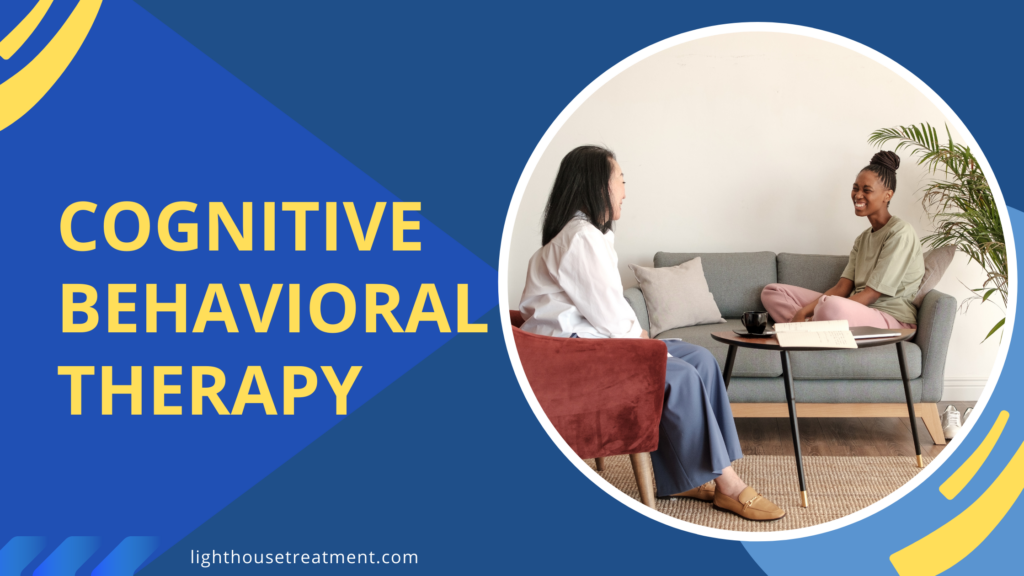
Typically, you must visit a certified and experienced therapist for a set length of time for Cognitive Behavioral Therapy (CBT). Once you master the CBT techniques, you can continue the treatment even without the supervision of a certified therapist or counselor. The main objective of CBT is to increase self-awareness of why you abuse these substances.
To prevent any consumption of the substance, you will be assisted in determining your triggers. These are events or feelings which may push you to take drugs or alcohol. Once the trigger is determined, the therapist will craft a positive coping mechanism for you to avoid getting a relapse.
Techniques Used for Cognitive Behavioral Therapy
The CBT sessions can be done individually or in a group. Some of the common techniques used for CBT include behavioral experiments, recording of thoughts, pleasant activity schedules, and exposure to various illustrations to analyze their emotions and thinking.
The techniques used will be based on the trigger, mental health condition, and severity of your addiction. After a series of CBT sessions, you may have already changed your perspectives and behaviors towards your addiction. These changes are usually long-term as they can help you deal with stress, anxiety, and other triggers effectively.
Using Cognitive Behavioral Therapy for Treating Addiction
If you’re under the influence of a substance and alcohol, you may exhibit patterns of behaviors that are challenging to change. However, Cognitive Behavioral Therapy can assist you in developing positive behavior by changing one’s thinking or mindset.
The licensed therapist will help you identify one’s negative thoughts and triggers that cause you to abuse substances and alcohol. After determining these unrealistic negative thoughts, the therapist will help create another positive line of thought that shall counter it.

Overall, these positive thoughts will reduce negative stress and thinking, thereby, also lessening the chance of consuming alcohol and drugs. Specifically, Cognitive Behavioral Therapy (CBT) provides the following assistance:
- Helps you overcome the triggers and negative thoughts which lead to consuming drugs and alcohol
- Encourages you to help yourself in controlling negative emotions
- Uses “talk therapy” to help relieve stress and anxiety, rather than abusing alcohol and drugs
Medication alone will not provide a holistic treatment as addiction affects both mind and body. The triggers which induce substance abuse must be dealt with efficiently. In line with this, here are some of the effective coping strategies you can adapt based on Cognitive Behavioral Therapy (CBT):
- Identification of Triggers
A seasoned and certified therapist will guide you in determining the triggers which lead them to consume the abused drug or alcohol. There will be specific methods of identifying these triggers and negative thoughts.
- Staying Away from Triggers
The therapist will help in handling triggers by changing their mentality and shifting it towards positivism. With this, you can be efficient in preventing any relapse from occurring.
- Coping with Triggers
The best way to cope with these negative thoughts and triggers is to undergo Cognitive Behavioral Therapy. This method aims to correct the negative stress, emotion, and thoughts that usually lead to substance abuse.
This therapy is very useful if you’re suffering from substance addiction and dependence. In particular, CBT can be very functional if you’ve used drugs and alcohol due to a negative and traumatic event in your life.
These negative stress and emotion can be efficiently handled through proper handling with the techniques of Cognitive Behavioral Therapy (CBT). If you plan to undergo rehab, you must consult with a licensed medical practitioner or doctor to get an appropriate treatment program.
Is Cognitive Behavioral Therapy for You?

Cognitive Behavioral Therapy has been found to be one of the most effective treatments for addiction. It is a treatment that can be done in an individual or group setting, and it has been proven to be successful in treating addiction.
If you are struggling with addiction, you may be wondering if cognitive behavioral therapy may be the right treatment for you. To determine this, it’s critical to consult with an addiction treatment professional who can help you understand if cognitive behavioral therapy suits your needs.
You should look for a treatment provider who is licensed and trained in cognitive behavioral therapy to help you understand how this type of therapy can help you. If you’re ready to begin cognitive behavioral therapy, contact an addiction treatment center today to get started on your road to recovery.