








Don’t see your provider? Contact us to confirm coverage.
Are you struggling with addiction and looking for a way to recover? Do you have a desire to stop drinking? If so, Alcoholics Anonymous may be a good option for you.
Alcoholics Anonymous or AA is a 12-step program that helps people with alcohol addiction. The program has been around for many years, and it has helped millions of people in staying sober.
But is AA right for you? Maybe you’re wondering what goes on in AA meetings. Or perhaps you’re asking about the program’s primary purpose.
If you’re looking for answers to these questions, then read on. This article will provide you with info about Alcoholics Anonymous as an addiction recovery program.
What Is Alcoholics Anonymous?
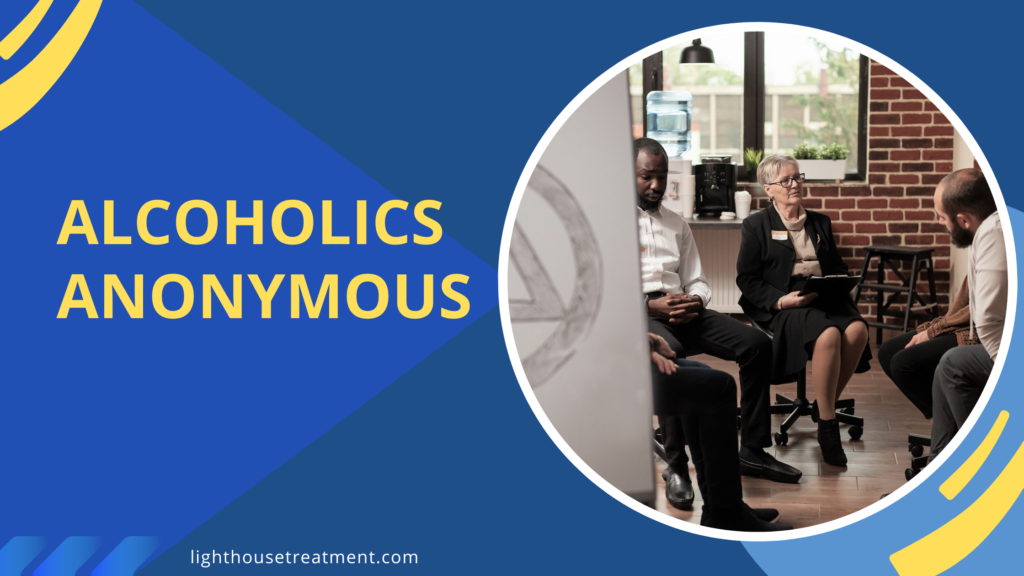
Alcoholics Anonymous is a free addiction recovery support group. Groups are typically led by someone who has recovered from alcoholism themselves. Meetings consist of people sharing their experiences with drinking and how they stopped. Alcoholics Anonymous is a fellowship that does not cost any money. There are no fees for AA membership. The only requirement for membership is a desire to recover from alcoholism.
The goal of Alcoholics Anonymous is to help members stay abstinent from alcohol. It aims to provide support for them as they work towards this goal. Group members are not required to become sponsors or give presentations. However, many find it helpful to do so in order to share their experience, strength, and hope with others.
Based on medical studies, a huge percentage of patients who have undergone the AA program have successfully achieved a sober life. This was seen even after the treatment program. It truly helped patients build stronger and positive habits and attitudes towards a healthier life.
What Are the Traditions of the AA 12 Steps Program?
The creation of AA group sessions is based on the popular 12 steps recovery program. It is based on a belief that an external higher authority is there to help us in doing the right thing.
The inclusion of spirituality greatly helped AA members develop stronger willpower to overcome alcoholism. Moreover, it promotes self-introspection and obedience to the rules of living a healthy and morally-upright life.
Like other organizations, the AA 12-step program is governed by a constant and firm tradition. These traditions ensure that the main objective of group therapy is achieved.
Below are the twelve traditions of AA:
- The priority is our common welfare; individual recovery depends upon A.A. unity.
- The only true authority for our group rests with a loving God, He may express Himself through our collective conscience. Our leaders are simply trusted servants; they do not oversee us.
- The desire to stop drinking is the only prerequisite in joining A
- Group autonomy is critical. This is except in cases where the actions of one group affect other groups or Alcoholics Anonymous as a whole.
- The only goal for each group is to spread its message to those who are still struggling with alcoholism.
- A. groups should never promote, finance, or be associated with any outside facilities or enterprises. This could cause problems that would divert our attention away from our main purpose.
- A. groups should not rely on outside financial support and instead be self-sufficient.
- Alcoholics Anonymous should always remain nonprofessional, but we may employ special workers for our service centers.
- Although A.A. ought never to be organized, we may still create service boards or committees to tend to those they serve.
- Alcoholics Anonymous focuses on helping those with alcohol addiction and remains neutral in public controversies. Therefore, the A.A. name should never be brought into these arguments.
- Our public relations policy is based on attracting people rather than trying to actively promote ourselves. Maintaining our anonymity in the press, radio, and films is essential.
- The foundation of all our Traditions is anonymity, which always reminds us to put principles before personalities.
What Is the Organizational Structure of AA?
The AA 12-step groups do not have a well-defined organizational structure like any other social or political group in society. The people who spearheaded the AA groups are those previous alcoholics who now live sober lives.
There are no permanent leaders in the small AA groups. The people who share in the sessions can appoint a temporary leader to guide them about AA literature and more. The leader can be replaced at any moment depending on the assessment of the members. Nevertheless, service committees are created to facilitate the entire operation of the smaller AA groups.
Most AA groups are self-supporting and they can accommodate donations from the outside. However, the group is never allowed to endorse any person or political party for the sole purpose of making money. This is highly prohibited as it can redirect the main objective of the AA group, that is, helping alcoholics achieve sobriety.
What Are the AA 12 Steps?
The 12 Steps of AA is perhaps the most popular and well-known recovery program in the world. The steps are designed to help recovering alcoholics change their behaviors and attitudes toward drinking.
The 12 steps of AA are as follows:
- We admitted we were powerless over alcohol — that our lives had become difficult to manage.
- Came to believe that a Power greater than ourselves could restore us to sanity.
- Made a decision to turn our will and our lives over to the care of God as we understood Him.
- Made a searching and fearless moral inventory of ourselves.
- Admitted to God, to ourselves, and to another human being the exact nature of our wrongs.
- Were entirely ready to have God remove all these defects of character.
- Humbly asked Him to remove our shortcomings.
- Made a list of all persons we had harmed, and became willing to make amends to them all.
- Made direct amends to such people wherever possible, except when to do so would injure them or others.
- Continued to take personal inventory and when we were wrong promptly admitted it.
- Sought through prayer and meditation to improve our conscious contact with God as we understood Him, praying only for knowledge of His will for us and the power to carry that out.
- Having had a spiritual awakening as the result of these Steps, we tried to carry this message to alcoholics, and to practice these principles in all our affairs.
Is Alcoholics Anonymous Right For You?
Alcoholics Anonymous is an effective and proven method for overcoming addiction and alcoholism. It is usually a part of a comprehensive approach to addiction treatment that includes other therapies and aftercare.
If you are interested in AA, you can find a nearby group by visiting the AA website. We also recommend that you speak to an addiction treatment specialist to learn more about your options for treatment.
Alcoholics Anonymous may be effective but for some people, it may not be the only solution. If you have tried AA and it did not work for you, there are other options available.
Do not give up on your sobriety journey just because one method did not work. There is hope and help available. Please call us today to get started on the road to recovery.