






Don’t see your provider? Contact us to confirm coverage.
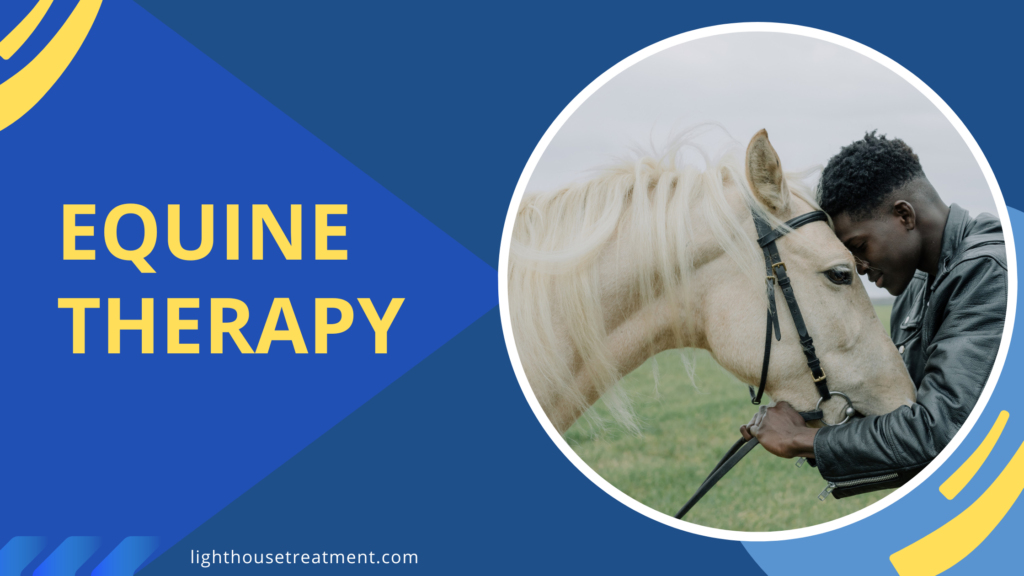
Imagine being able to get help for your addiction from a horse. Believe it or not, equine therapy is gaining interest as a treatment option for those struggling with addiction. Horses are incredibly intuitive creatures, and they can provide a unique and powerful experience that can help people recover from their addictions.
If you’re looking for a new approach to addiction recovery, equine therapy may be the answer for you. In this blog, we will explore what equine therapy is, how it can help you recover from addiction, and what you can expect from this unique form of treatment.
What is Equine-Assisted Therapy?
Equine therapy or equine-assisted therapy is a form of treatment that uses horses as an intermediary to help people with various mental and physical health problems. It’s a therapy that’s used to address addiction, anxiety, PTSD, depression, dual diagnosis, and a range of other mental health issues.
The horse is used as a tool to help the person in therapy work on issues such as self-esteem, trust, communication, anger management, and many others. Horses are sensitive to feelings, so they can readily detect the patient’s positive and negative emotions. Horses readily react to the mood of the person handling them.
A common misconception is that equine therapy is just all about learning how to ride a horse. However, that’s not the case. An equine therapy session includes the different aspects of caring for a horse like grooming, feeding, and exercising. This helps the person in therapy to develop a bond with the horse, which can be beneficial for both parties.
The Advantages of Using Equine Therapy for Addiction Treatment
Some experts suggest that equine therapy can be helpful for people struggling with addiction. Below are some of the advantages of this type of therapy.
1. Rebuilding Trust
For people who struggle with drug dependence and addiction, there will always be the fear of being judged by others. This prevents clients from opening up and communicating with other people.
To address this situation, Equine therapy can provide a safe and relaxing environment for patients. It motivates clients to regain one’s trust in others and remove the fear of being misjudged.
2. Helps Address Emotional and Behavioral Issues
People struggling with addiction often have co-occurring mental health disorders. Equine therapy can help address these issues by providing an outlet for patients to express their feelings.
This type of therapy also helps patients learn how to control their emotions and develop healthy coping mechanisms. In addition, equine therapy can also teach people how to be more responsible and build a strong
3. Opportunity to Explore the Application of Equine Therapy
Different clients will have unique reactions to taking care of the horse. This provides a good avenue for therapists to explore and learn various traits exhibited by patients upon spending time with the horse.
With this, therapists and counselors can further enhance the process to make equine therapy more efficient and effective.
4. Safe and Secure Therapy
Equine therapy is a drug-free treatment. It doesn’t require the use of any medical equipment or drugs that may put patients’ lives at risk. This form of therapy is safe and can be done in different settings, like stables, ranches, or even in an open field.
5. Complements Other Forms of Treatment
This therapy can be used in conjunction with other treatment methods, like cognitive-behavioral therapy and group therapy. When used together with other treatment options, equine therapy can further increase the chances of a person recovering from addiction.

What to Expect from Equine Therapy?
An equine-assisted therapy session usually lasts for about an hour or more depending on the provider. Before the session, the therapist will talk to you about your goals for therapy and what you hope to achieve. You will also be taught safety protocols, such as how to approach and lead a horse.
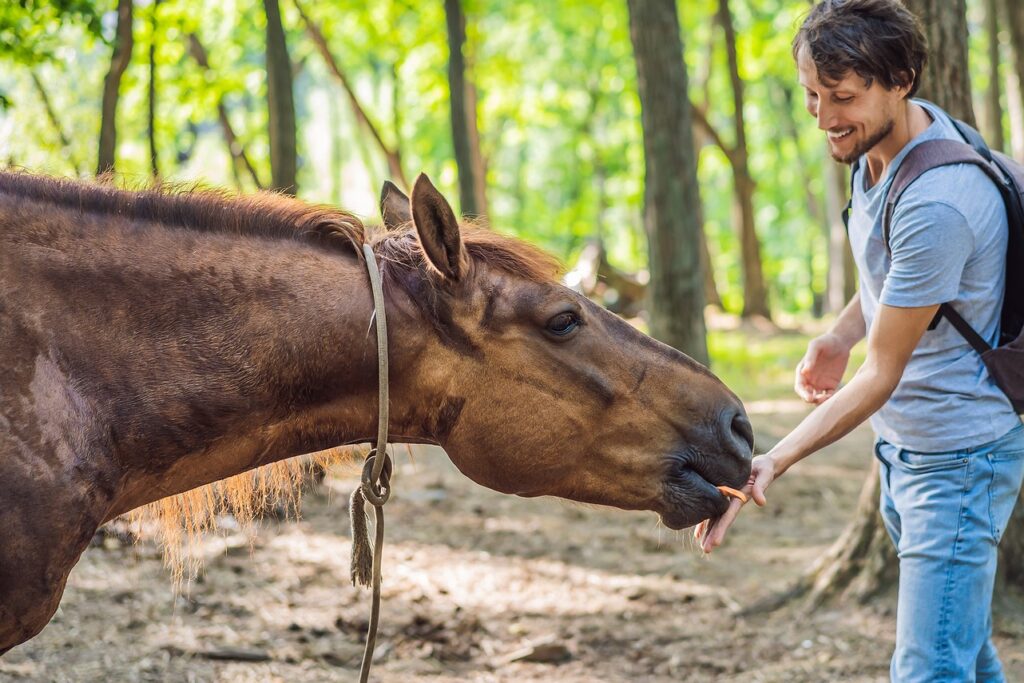
During the session, you will be asked to do different tasks with the horse, such as grooming, walking, leading, or even riding. The therapist will be there to guide you and offer support.
The therapist will observe how you interact with the horse and will use that information to help you work on your goals.
After the session, you will debrief with the therapist about your experience and also talk about any insights or revelations you may have had.
Depending on your experience with horses, a session may not always involve mounting a horse. Instead, the therapist will determine what activities will be best for you based on your goals.
Is Equine Therapy for Addiction Right for You?
Equine therapy can be a beneficial treatment option for people struggling with addiction. It can help rebuild trust, address emotional and behavioral issues, and provide a safe and secure environment for therapy.
As this type of treatment is not as common compared to other methods, it may not be readily available in many locations. Another downside is that the cost may be prohibitive for some people. Some insurance providers may not cover this type of therapy, so it’s important to check with your provider before you start treatment.
If you’re considering equine therapy for addiction, It’s important that you do your research to find a qualified therapist. You should also make sure that the facility is reputable and has experience treating people with addiction.
We recommend that you speak with an addiction treatment expert first. This kind of treatment may be a good complement to other forms of treatment and drug rehab, but it’s important to make sure that it’s the right fit for you.
Contact us today to speak with a treatment specialist about addiction treatment programs that will holistically address your needs.