
Methamphetamine is one of the most addictive drugs in the world. It’s also one of the most dangerous. This powerful stimulant can cause a person to feel energized and euphoric, but it can also lead to addiction.
In this blog post, we’ll discuss meth addiction, withdrawal, overdose, and detox. We’ll also touch on treatment options for those struggling with this disorder.
What Is Meth?
Meth is a powerful stimulant that affects the central nervous system. It was first synthesized by Nagayoshi Nagai in 1893 and is categorized as a substance of the amphetamines class.
Meth is known to have the molecular formula or C10H15N and has euphoric, stimulant effects that make it one of the most addictive drugs in the United States. It is a Schedule II drug, meaning that it has its medical uses but is commonly used illicitly.
Its effects have manifestations on vital statements like heart rate regulation, blood pressure, body temperature, appetite, and cognitive reactions such as responses linked with alertness/alarm conditions, mood, and attention.
What Does Meth Look Like?
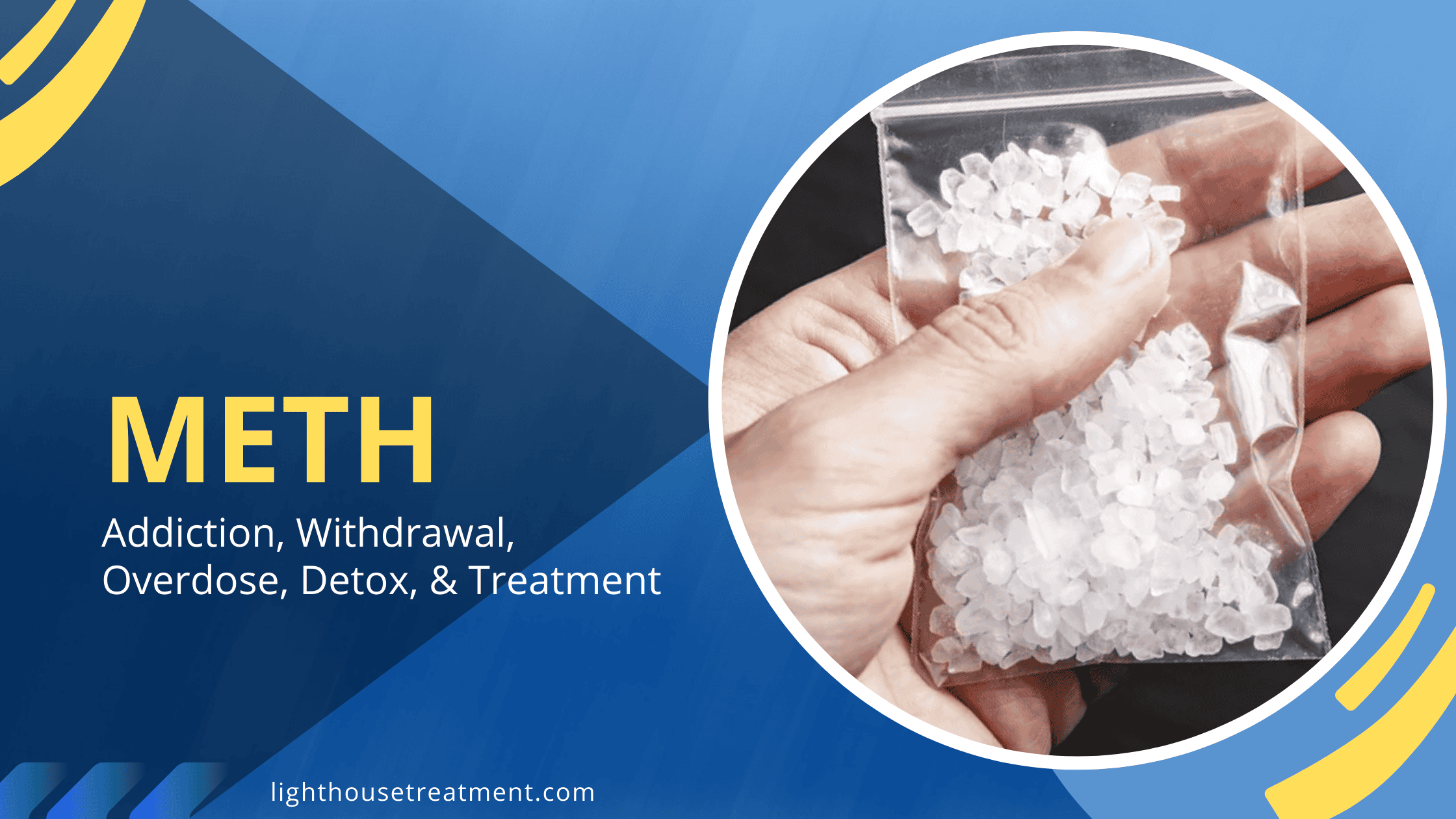
Methamphetamine is normally a white, odorless powder. It can also be made into a pill or crystal form that can be smoked. Crystal methamphetamine is also known as “ice,” “crystal,” “tina,” and “glass.”
Smokable methamphetamine is also known as “speed” or “crank.” Although meth can be taken orally, injected, smoked, or snorted, most users smoke it because this delivers the largest amount of the drug to the brain quickest.
What Is Meth Used For?
Methamphetamine, or meth, is a powerful stimulant drug that is used for both medical and recreational purposes. Meth has a long history of use in militaries around the world as a way to keep soldiers alert and focused.
However, it is now most commonly used as a recreational drug. Meth can produce intense feelings of pleasure and euphoria, and many people become addicted to it after using it only once.
How Does Meth Work?
Methamphetamine stimulates the release of all brain hormones or neurotransmitters at once. Those particularly affected are noradrenaline, serotonin, and dopamine; their main function is to send signals through the brain and body.
Noradrenaline is a neurotransmitter that has a fight or flight chemical composition that alerts an individual to respond to threats. An increase in this neurotransmitter can be manifested through fluctuations in blood pressure and heart rate, dilated pupils, and the widening of the air passages.
Serotonin is a neurotransmitter that regulates mood and affects all kinds of functions such as digestion, appetite, sleep, and social behavior while dopamine (the happy hormone) releases feelings of pleasure when engaging in health and interactive activities. In some instances, it is responsible for attention and memory.
Once meth is ingested, it has three times the amount of dopamine as cocaine. Its potency can raise a person’s dopamine level ten times higher than a non-drug pleasurable activity.
How Long Before You Can Feel the Effects of Meth?
Meth produces feelings of euphoria, increased alertness, and increased energy. These effects usually occur within a few seconds to a few minutes after meth is ingested, depending on the mode of ingestion. The effects can last for several hours.
How Long Does Meth Stay In Your System?
The answer to this question largely depends on the type of drug test that is being administered.
Blood test – 24 – 72 hours
Urine test – up to 3 – 6 days
Saliva test – up to 72 hours
Hair test – up to 90 days
What are the Short and Long-term Effects of Meth?
The initial short-term effects of meth are the opposite of euphoria, especially after the drug has left the system. Other mood-related short-term effects are irritability, forgetfulness, restlessness, and overfatigue.
Long-term effects of meth can result in long-term physical and mental damage. These are anxiety, birth defects in children (if meth users are pregnant women), brain damage, cardiac arrhythmia, possible coma, damage to brain cells, liver, and kidney, and stroke for extreme cases. Long-term mental disabilities include paranoia, psychosis, hallucination, and depression.
Behavioral symptoms can be violent tendencies and persistent scratching while physical symptoms are skin sores, teeth deterioration, and bloodshot eyes. Drug users could be at risk of HIV and other infectious diseases if needles carrying the substance are shared.
Is Meth Addictive?
Yes, meth is highly addictive. Recreational users consciously seek the drug due to its euphoric manifestations and are typically unaware of its risks. Tolerance for the substance increases as the dose gets higher; compulsive use produces feelings that in time make one crave more of the drug.
The danger of meth addiction lies in how fast the user can become dependent on the drug. It only takes one to two uses for an individual to get addicted. Because of this, it can be one of the hardest substances to get off the habit.

What Are the Withdrawal Symptoms?
Withdrawal symptoms refer to the abnormal reactions a person’s body goes through after discontinuation of an illegal drug. Its potency makes for withdrawal symptoms to be as intense as its high. Symptoms start from 24 hours after intake onwards.
The main physical symptoms are the feeling of lethargy, fatigue, or tiredness that are less harsh than the drug’s mental effects. The treatment process can remove feelings of pleasure that can lead to depressive symptoms.
Withdrawal symptoms based on time frame are:
24 to 72 hours after intake sees the user experiences the physical deprivation of the drug that manifests through fatigue, strong depression, paranoia, anxiety, hallucinations, and suicidal thoughts.
The first week of symptoms makes the body feel strained from the lack of drugs. The person experiences cravings, body aches and pains, poor concentrations, and weight gain to overcompensate for the lack of sensation.
In the second week, it is expected that the user undergoes mental and emotional challenges such as mood swings and other mental effects.
What Causes Meth Overdose? Signs of an Overdose
Meth overdose can occur when a person takes too much of the drug. This can happen accidentally or on purpose.
Symptoms of a meth overdose include difficulty breathing, chest pain, rapid heart rate, seizures, and loss of consciousness.
What Should You Do If Someone Is Overdosing?
Methamphetamine is a very dangerous drug and can cause serious health problems, even death. Methamphetamine stimulates the central nervous system and can cause heart problems, seizures, and brain damage. It can also cause psychotic behavior, extreme mood swings, and paranoia.
If someone is overdosing on meth, you should call for help immediately. Stay with the person until help arrives. Try to keep them calm and safe until help arrives.

How Do You Treat Meth Addiction? Detox & Treatment
Professional addiction treatment can be very successful, but it’s important to find a program that fits your needs. There are many different types of programs, so you should do your research before choosing one.
Make sure you find a program with a good track record and that has staff who are knowledgeable about meth addiction.
Final Thoughts: Addressing Meth Abuse and Addiction
Meth addiction is a complex problem that requires medical detox and professional treatment.
If you or someone you know needs help with meth addiction, please seek out professional assistance.